

The Origins of Shifter Romance: From Folklore to Fated Mates

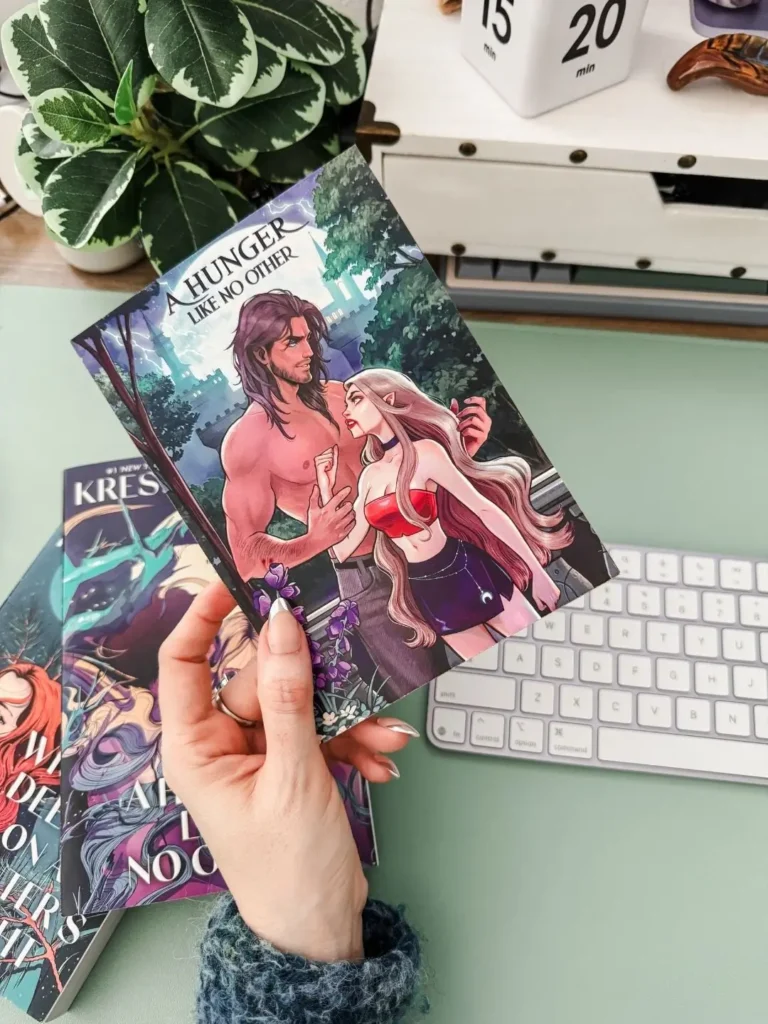
This post is part of the Once Upon a Genre series, where we dig into the history, evolution, and DNA of romance books. Because understanding where things came from makes you love them even more.
I was a fangs over fur girlie for a long time. Vampires had my heart, my TBR, and honestly most of my personality for years. The idea of switching allegiances felt almost disloyal, like I was trading in something elegant and dangerous for something that howled at the moon and shed everywhere. Who wants that?
And then I found shifter romance. I don’t remember the exact book that started it all for me, but I remember binging a lot. The Breeds by Lora Leigh, which was my first knotting experience and what a time to be alive. Or reading the Pride and Magnus Pack series by Shelly Laurenston and discovering how adorable shifters can be when their human personality matches the animal traits so perfectly. Of course we can’t forget the fated mates and finally claiming your mate, which I particularly remember how Mitch impulsively bites Sissy in The Mane Attraction by Shelly Laurenston to this day.
My love for shifters also grew from urban fantasies like Women of the Otherworld by Kelley Armstrong, a series that made me love pack dynamics and showed me a heroine that can hold her own against a pack of wolves. Shifters by Rachel Vincent, which we’re not gonna discuss because it wrecked me in ways I was not prepared for.
And somewhere in the middle of all of that, I realized that pack bonds, fated mates, territorial alphas and that tension that’s somewhere between the animal instinct and the actual human? That’s a formula that works for me every time.
But where did this trope actually come from? How did we get from werewolves as terrifying monsters to being the blueprint for some of the most iconic heroes we’ve ever drooled over in paranormal romance? Let’s talk about the origins of shifter romance today.
Shifter romance is a trope, not a genre because it shows up in paranormal romance, urban fantasy, romantasy, even sci-fi. The shifter is the ingredient, the character type. The story or container changes according to the genre. If you want the full breakdown of why that distinction matters, we’ve covered it in our Genre vs Subgenre vs Trope discussion.
This post contains affiliate links. That means we receive a small commission at no cost to you from any purchases you make through these links.
Before They Were Book Boyfriends: Shifters in Mythology and Folklore
Long before shifters were growly romance heroes with suspiciously perfect abs and one emotional coping skill, they were pretty dark.
Shapeshifting shows up all over mythology and folklore, but most of those stories were not giving “fated mates and cozy cabins.” They were about fear, power, punishment, hunger, freedom and what happens when the human part starts to slip.
Werewolves and the Curse of Lycaon
One of the most famous Western werewolf stories comes from Greek mythology. Lycaon, the king of Arcadia, served Zeus human flesh and was punished by being turned into a wolf. The original werewolf was a warning.
Medieval Europe made the image even darker. Werewolves became symbols of the cursed, the dangerous and the wild thing that was living at the edge of civilization.
Berserkers and the Primal Warrior
Norse berserkers brought a different kind of animal energy to the shapeshifter tradition. These warriors were said to fight with bear or wolf like fury, crossing the line between human and beast during battle.
You can see the bones of the modern shifter hero here: dangerous, protective, ruled by instinct, and hopefully civilized enough. Hopefully.
Skinwalkers
Skinwalker stories carry a very specific cultural weight, especially within Navajo/Diné traditions. They are not generic “person turns into animal” folklore, and they should not be treated like interchangeable monster lore because there is also a spiritual meaning behind these stories which isn’t always included when they are used in books.
They belong in a broader conversation about shapeshifting because context matters. Especially when fantasy and romance have not always been great about borrowing from Indigenous traditions without understanding them.
Kitsune, Hulijing, and the Seductive Shapeshifter
Some shapeshifters were tricksters instead, and you couldn’t trust them.
Japan’s kitsune and China’s hulijing are fox spirits who can take human form, often appearing as tricksters, lovers, protectors, or dangerous seducers. They bring in the side of shapeshifting that is less about brute force and animal instinct and more about mystery, beauty and possibly betrayal.
Selkies
Celtic selkie stories are devastating. Selkies are seals who shed their skins to become human. In many stories, a man hides a selkie woman’s seal skin so she cannot return to the sea. She stays. She may marry him. She may have children. But she is never fully there.
Eventually, she finds the skin and leaves. The skin is her freedom and her way home.
From Monster to Mate: The Origins of Shifter Romance
Romance got the shifter from a few centuries of cautionary tales, took a long look at the guy who turns into a wolf when he loses control, and thought: yeah, we can work with this.
Getting from cursed monster to fated mate took about a hundred years and you can watch it happen in stages.
The Gothic Era: The Shifter Was the Warning
In 1886, a shifter story was going to end badly.
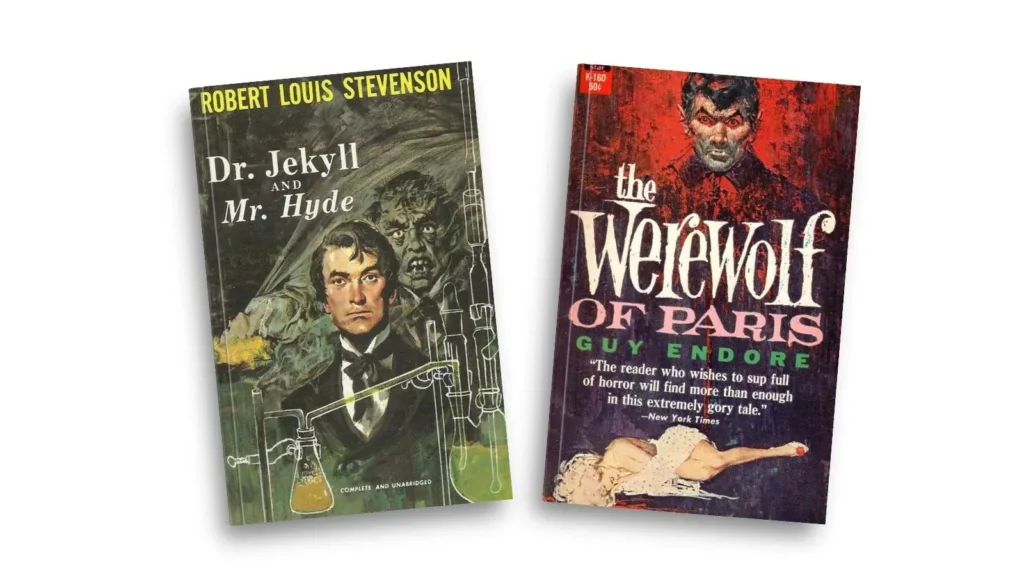
In the Strange Case of Dr Jekyll and Mr Hyde, Robert Louis Stevenson wrote about the polite version of a man and the thing living under his skin, and what happens when it gets out. Guy Endore’s The Werewolf of Paris (1933) does the same job, just bloodier.
No happily ever after and no mate. In these books the transformation is the problem, and the story punishes it.
That side of the shifter story never actually went away, by the way. It just stopped being the only option. If you want the horror version, we’ve got a whole list of werewolf horror books.
The 1970s to the 1990s: The Blueprint Gets Drawn
Before a shifter could be a love interest, he needed a society and a heroine.
Gary Brandner’s The Howling (1977) handled the first part. It gave werewolves a hidden world running underneath the human one, with its own rules and its own reasons for staying quiet. Packs, territory, secrecy and the risk of getting caught. That’s still the base of almost every shifter romance you pick up today, and it showed up as horror.
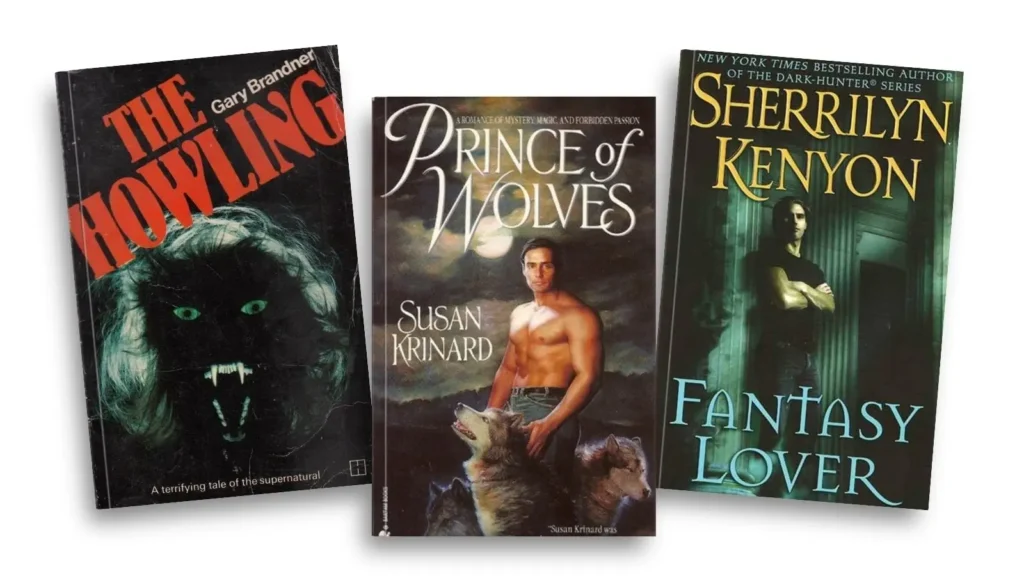
The second part took until 1994. Susan Krinard published Prince of Wolves with Bantam, one of the earliest werewolf romances to come out of a major New York house. It had a werewolf hero, a human heroine and the romance at the center.
By 2002, when Sherrilyn Kenyon’s Dark-Hunter series showed up with Fantasy Lover, you can see the pieces lining up. Ancient bonds, immortal warriors and mythology as worldbuilding were all there, and the 2000s put it together.
The 2000s: When Everything Split in Two
This is the decade shifter romance stopped being a niche and turned into a whole thing. And almost immediately, it split down the middle.
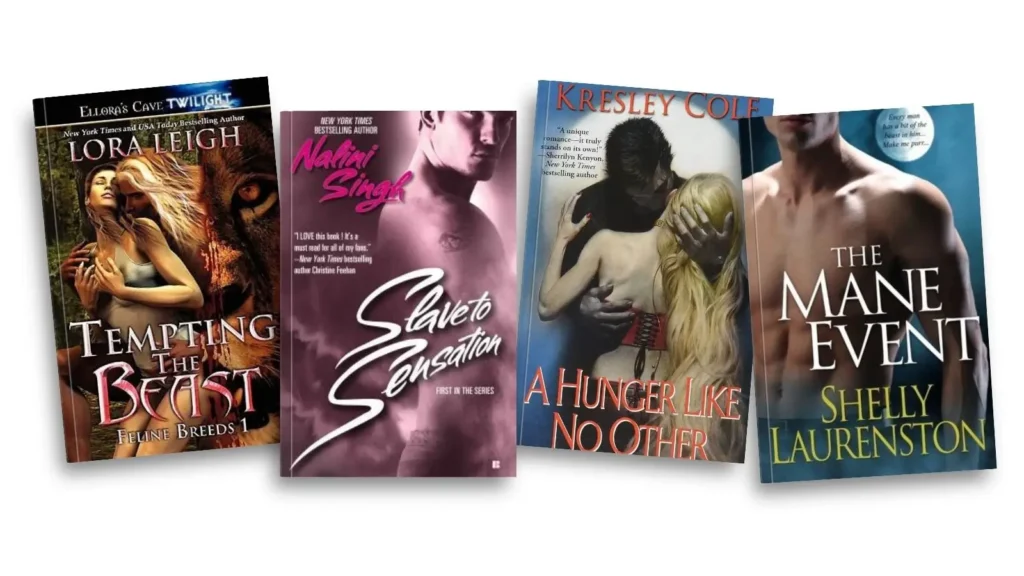
On one side, the readers who wanted the romance to be the whole point. Lora Leigh’s Breeds kicked off in 2003 with Tempting the Beast and pushed the heat well past where mainstream publishing was comfortable. Nalini Singh’s Psy-Changeling arrived in 2006 with Slave to Sensation and built changeling pack structure so thoroughly that people are still arguing about details twenty years later. Kresley Cole’s Immortals After Dark landed the same year with A Hunger Like No Other and we got our blueprints for the fated mate trope we’ve been chasing ever since. And Shelly Laurenston came in with the Magnus Pack in 2006 and Pride in 2007 and proved you could make a shifter romance funny without making it any less feral.
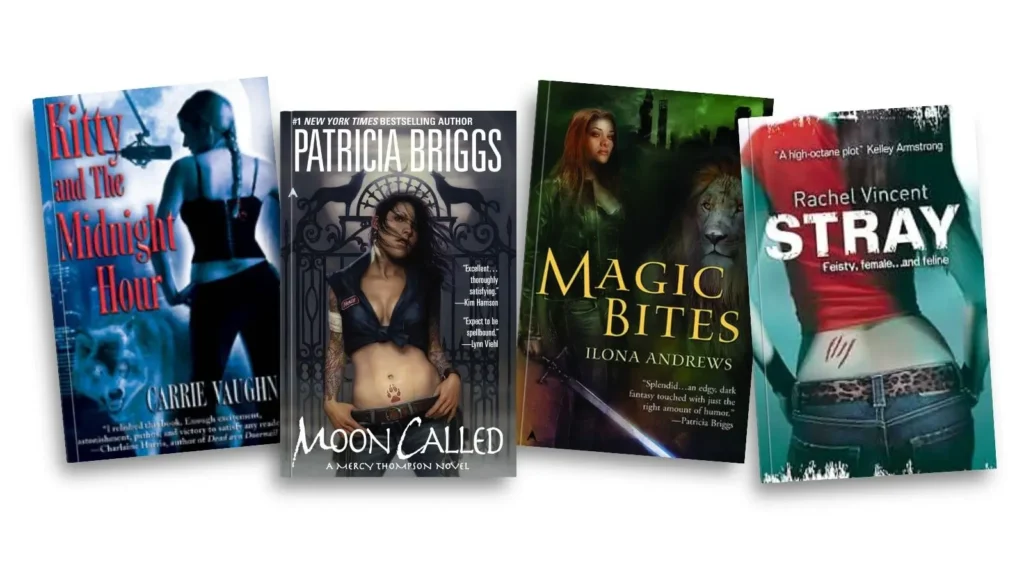
On the other side, the readers who wanted the world building first and the romance either secondary or not even there. Carrie Vaughn’s Kitty Norville started in 2005 with a werewolf who hosts a late night radio show and has real anxiety about what she is. Patricia Briggs gave us Mercy Thompson in 2006, a coyote shifter who fixes cars and somehow survives pack politics, vampire seethes and fae courts without getting swallowed by any of them. Ilona Andrews launched Kate Daniels in 2007 and blurred the lines between the two camps. Rachel Vincent’s Shifters started in 2007 with Stray.
The line between paranormal romance and urban fantasy got blurrier in the 2000s than a werewolf mid-shift, and honestly that is a big part of what made the decade so good to read through. This was the peak of both genres and still to this date, some of the most iconic books, series and authors were published. I am still thinking about them today.
Late 2000s and Early 2010s: The Wolf Stops Being the Default
For a long time, shifter romance basically meant wolf. Pack, alpha, mate bond, done. Then the late 2000s hit and things started to change.
Would you like to save this?
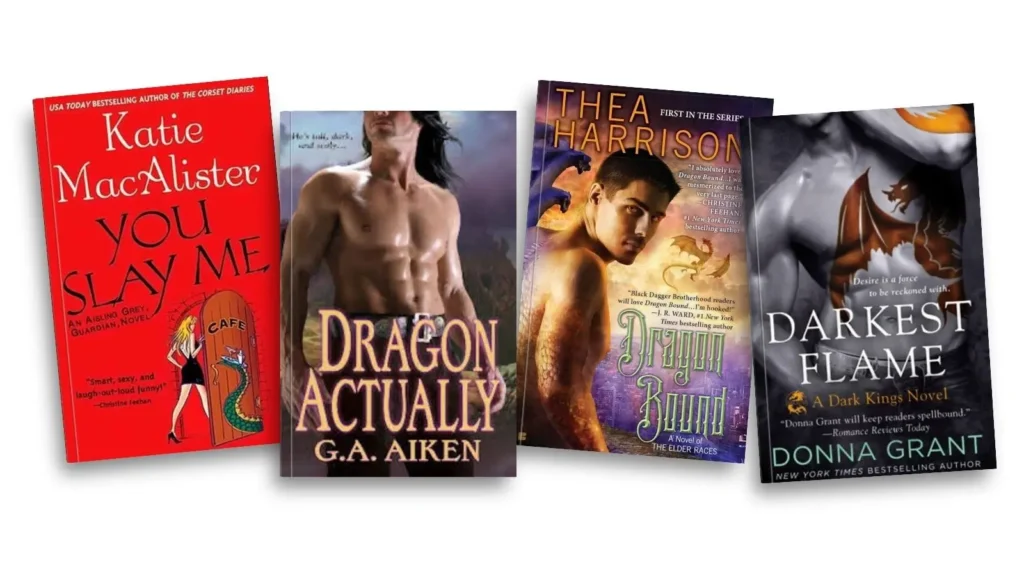
Dragons led some of it. Katie MacAlister got there early with You Slay Me in 2004, where the love interest is a wyvern spending most of his page time in extremely handsome human form. G.A. Aiken launched Dragon Kin the same year with Dragon Actually, and if that name rings a bell it should, because G.A. Aiken is Shelly Laurenston. Same woman who gave me the Magnus Pack and Pride, writing dragons who are just as funny and significantly more likely to set something on fire. Thea Harrison’s Dragon Bound shook things up mixing urban fantasy and paranormal romance vibes. And Donna Grant took Highland warriors and turned them into Dragon Kings with Dark Kings, which has been running since 2012 and shows no sign of stopping.
Bears got their turn slightly later and mostly through indie. Eve Langlais started Kodiak Point in 2014 and Vivian Arend publishes the Takhini shifters the same year, all small town bear romance became its own lane. Although Laurenston beat everybody there too, since Lock MacRyrie is a grizzly and Lou Crushek is a polar bear and they are some of the most memorable bear shifters I’ve ever read.
By the time indie publishing hit full speed, the wolf wasn’t the default anymore. He was still the most popular, just not the only one.
2010s to Now: Indie Publishing Took Off
Self publishing changed what was possible, and shifter romance cashed in harder than almost anything else. Nobody needed a New York acquisitions meeting to decide whether readers wanted something darker or weirder or more explicit. Readers just bought it, and that settled the argument.
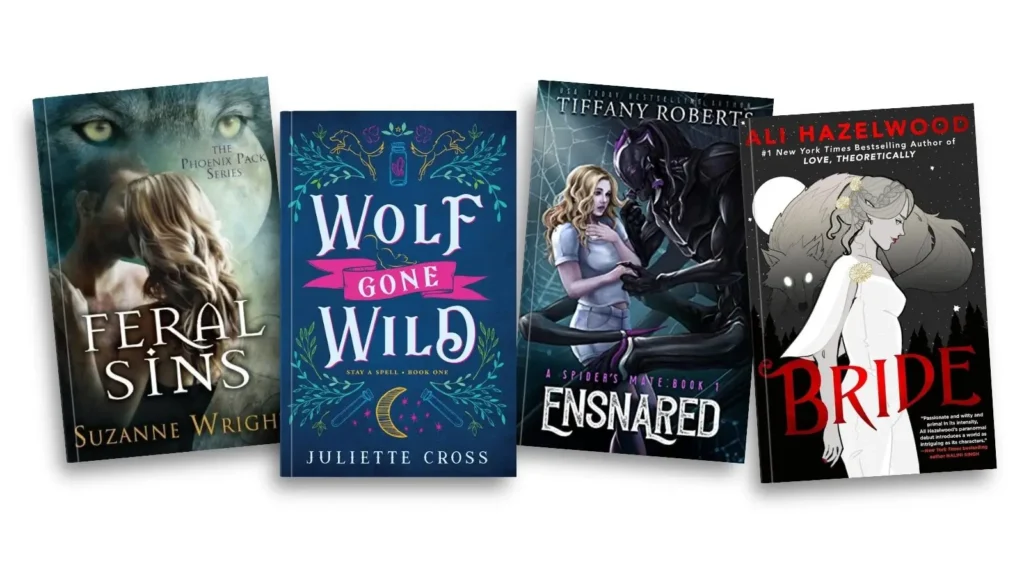
Suzanne Wright’s Feral Sins (2012) put pack politics and mating bonds together with spice. Juliette Cross went the other direction in 2020 with Wolf Gone Wild, a werewolf who can’t shift and the witch who’s responsible for it, making it warm and funny. And the whole omegaverse corner of the genre grew up during this time, using the pack structure but not always needing the actual shifters.
This was the time of introduction of more types of shifters. We are not just talking about wolves, felines and bears, but birds and insects and more. Monster romance started to rise heavily, first via sci fi romance and then in other subgenres as well. But even as monster romance was rising, the rest of the shifter romance (paranormal or urban fantasy) started to decline).
Then February 2024 and Bride by Ali Hazelwood.
Bride took a werewolf hero, a fated mate dynamic and a political alliance marriage and packaged all of it for people who’d never picked up a paranormal romance in their lives. Contemporary and romantasy readers picked it up, and so did people who’d never heard of a mating bond. A lot of them went looking for the next one right away. That wave is still moving through right now. And in my opinion, only growing and bringing the shifters back into the spotlight.
The Alpha Hero Then and Now
Pick up a shifter romance from 2005 and you know exactly who the hero is. Dominant. Possessive. Aggressive in ways the book frames as proof of how much he feels instead of something anybody should be working on. “Mine,” about four seconds after he catches her scent, with zero courtship.
And it worked, because the fantasy underneath it is real. Being recognized on sight by something that runs on pure instinct and doesn’t hedge, doesn’t play games, doesn’t need a minute to think it over. The animal instinct chooses and the animal is never wrong. It chose you. That’s a powerful thing to read about.
We still want that, but the books complicate it more now. There’s room now for the heroine to have opinions about the mate bond. To push back. To refuse the claiming and make him work for it, which builds actual tension instead of stalling the inevitable for a hundred pages. The cinnamon roll alpha exists now and he’s thriving. So is the alpha who growls first and then, eventually, under duress, says a feeling out loud.
Are we getting rid of the feral, possessive, terrible-decision-making alpha whose instincts have completely overridden his sense? Absolutely not. Readers want him, I definitely do. But we’ve got options now and options are good for everybody. I still prefer to read the alpha shifters, but I can get in the mood for a cinnamon roll once in a while, and I can definitely appreciate a mate that makes him work for it.
Beyond the Eurocentric Wolf: How the Trope Is Still Expanding
For most of its mainstream publishing life, shifter romance had a narrow imagination. Werewolf pack by default. Hero implicitly white by default. Mythology pulled almost entirely from Greek, Norse and Western European traditions. Publishing was slow to acquire anything else.
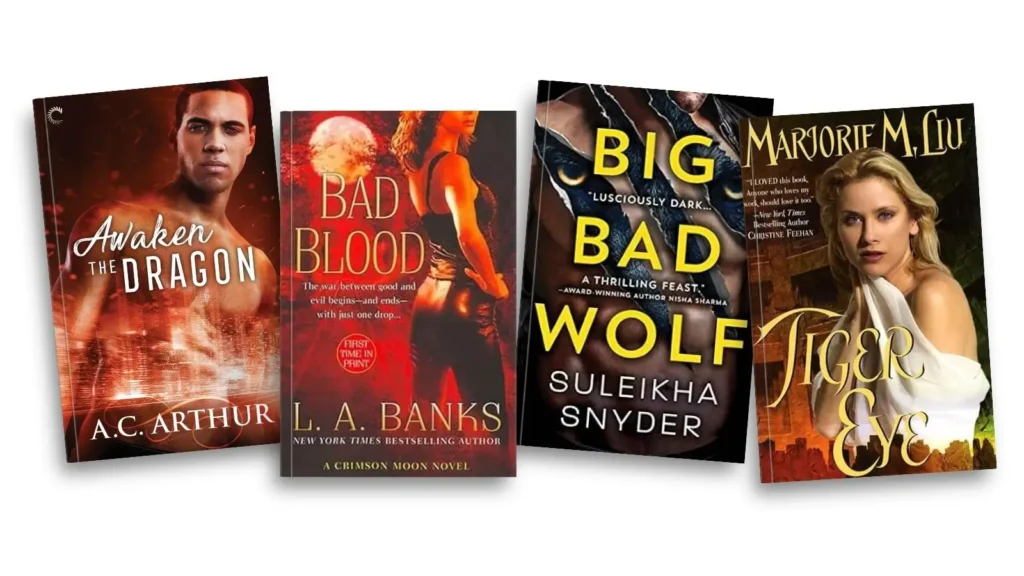
Indie changed that math. Authors who couldn’t get traction through traditional channels went out and built readerships directly, and some of them were doing work the gatekeepers had already passed on and maybe we don’t see talked about. A.C. Arthur and L.A. Banks carved out space for Black paranormal romance and urban fantasy when the industry wasn’t interested in it. Suleikha Snyder’s Big Bad Wolf (2021) brings South Asian cultural context into a shifter romance. Milly Taiden has an enormous catalog centering Latinx characters and interracial pairings. Marjorie M. Liu’s Tiger Eye (2005) built an Asian-inspired paranormal world when almost nobody in the category was doing it. These are the authors I cut my teeth on when diving into the paranormal and if you’re just getting to discover shifters, they’re worth a read too.
The mythology expansion is still slower but it’s happening. Kitsune are showing up. Indie authors are pulling from other trickster traditions that have no equivalent in the Eurocentric werewolf model. And there are entire shapeshifting traditions romance hasn’t touched yet.
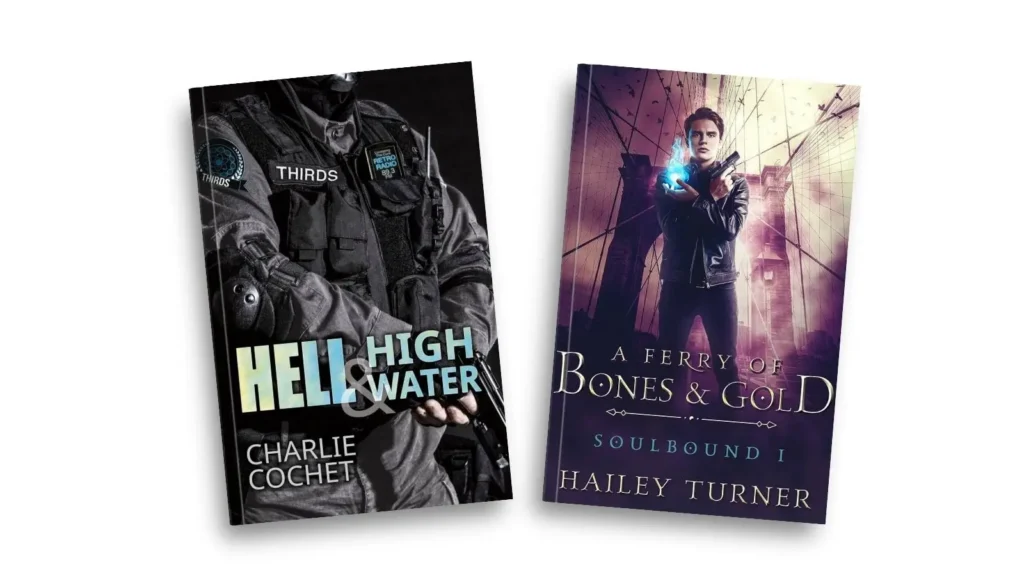
Queer shifter romance has moved faster than racial diversity. Charlie Cochet’s Hell & High Water (2014) is the kind of fast, action-heavy queer shifter romance that makes it obvious the audience was always sitting there waiting for somebody to write the books. And what an amazing series that is. Same with Hailey Turner incorporating shifters in her Soulbound (2018) series and mixing in lots of different mythologies in each book of the series. Queer omegaverse in particular has built its own ecosystem more or less independently of mainstream paranormal romance.
In 2026 there’s progress, but it’s uneven, and indie is way ahead of traditional publishing. Readers are always asking for more and the authors delivering it are finding their people.
Shifters on Screen
Shifter romance has a complicated relationship with adaptations though. The films are mostly beautiful disasters and the TV shows are chaotic and beloved and we watch them anyway.
Underworld (2003) set the look for the entire early 2000s supernatural wave. Rain, leather, a blue filter over everything, an ancient blood feud between vampires and lycans, forbidden romance. Yes, we wanted more of that. Blood & Chocolate (2007), adapted from Annette Curtis Klause’s 1997 novel, is criminally underseen and takes its own pack mythology more seriously than most paranormal films of that era. Red Riding Hood (2011) went full dark fairy tale. And Twilight made werewolves mainstream in a way nothing has managed before or since, whatever we’re all still processing about the imprinting. Were you team Jacob or team Edward?
Television’s been kinder to us though. True Blood (2008 to 2014) threw shapeshifters, werewolves and every other supernatural creature into Louisiana and let them battle it out, with enough carnage to hold our attention for seven seasons. The source material was pretty great to begin with, this is still one of my favorites and I genuinely consider rewatching it all the time. Teen Wolf ran six seasons on pack dynamics. And Bitten (2014 to 2016) adapted Kelley Armstrong’s Women of the Otherworld across three seasons, which means Elena Michaels, from my own conversion story up at the top of this post, actually made it to screen and yes I do recommend you watch it.
Where Shifter Romance Goes From Here
Bride opened a door and a lot of people are walking through it now. They’re still working out that there’s a whole vocabulary and twenty years of backlist sitting there. New readers means new energy and new demands, and authors move on that a lot faster than publishers do.
Sci-fi shifters are picking up steam. Honey Phillips launched Alien Wolf Tales with Big, Bad Alien in 2025. She’s definitely a favorite. Paranormal rom-coms are also holding their ground, with books like Crescent Kingdom by Tessa Hale. And omegaverse keeps expanding in indie which tells you the appetite for shifter romance is not waning.
The future probably isn’t one thing. It’s the cinnamon roll and the feral one on the same category, read by the same reader. That’s me! It’s mythology nobody’s written yet finally getting written. It’s a wave of readers who came in through Bride and they’re now working backwards through a backlist.
We’ve had shapeshifters in our stories for thousands of years and for most of that time they meant danger. Romance flipped it, and made being claimed by something that old and that certain feel like being found.
That question isn’t going anywhere. Neither is the trope.
And if you are or were a vampire girlie like myself, there’s the animal instinct that a shifter romance delivers that you just can’t get anywhere else.
Keep Reading
Here’s what to read next.
If Bride was your way in, these are the books to pick up next. If the mate bond is the part you’re chasing, the fated mates guide breaks down why it works, and these fated mates paranormal romances are on Kindle Unlimited right now. And if you want a pack to move into for a whole series, the Cascadia Wolves guide has the reading order and a found family to dive into.
If you’re wondering more about omegaverse, mating heat and a proper shifter romance starter guide are all coming in this series.
Once Upon a Genre is an ongoing series at Under the Covers where we dig into the history, evolution and DNA of romance books. Because understanding where things came from makes you love them even more.
Before you go, tell me what was your gateway to shifter romance, or shifters in books in general?
Pin It for Later


Thank you for doing the research and writing a lovely article about this trope. Very interesting to read about the evolution. I will definitely check out the books you have recommended in your article. I am so happy that I have found you. I will give you a follow on Instagram.
So happy you found it interesting and to have you here.