Jacqueline Carey Interview on 25 Years of Kushiel’s Dart

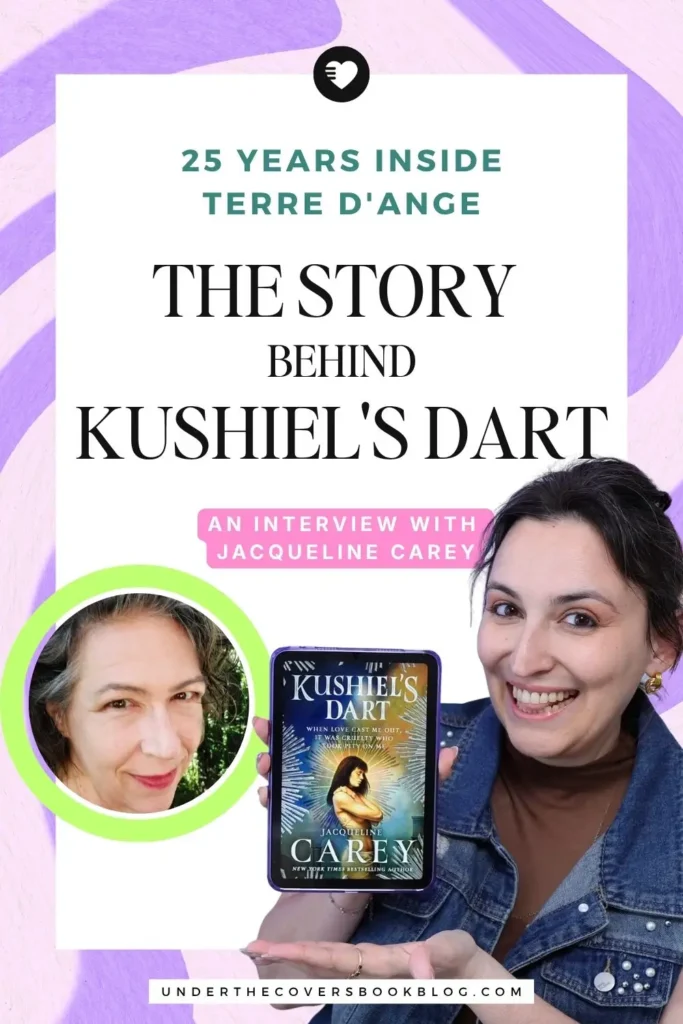
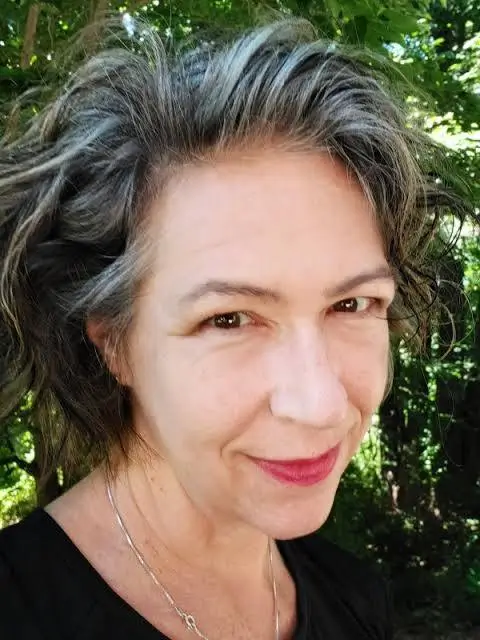
Twenty-five years ago, Jacqueline Carey published Kushiel’s Dart and quietly changed what epic fantasy was allowed to be. I have been pushing this series on people for years, and this month, for the 25th anniversary, I got to sit down with the woman who built Terre d’Ange and ask her how she did it.
In this Jacqueline Carey interview we talked about writing a heroine who is both a feminist icon and a divinely ordained masochist, the happy accident that handed her an entire theology, why she threw out the rulebook on her own prose, and what she wants you to do when the first hundred pages feel like a lot. And if you have ever wanted to read these books and felt daunted by them, this is your moment to start with company. Keep reading for more details on the readalong.
Watch the interview
This post contains affiliate links. That means we receive a small commission at no cost to you from any purchases you make through these links.
The whole series started with a coffee table book about angels
I asked Carey whether she had any idea, back in 2001, what she had actually written. She knew it was big, she told me, but the origin of the world is almost too good to be true. A friend who worked on coffee table books called her before a pitch meeting and asked if she had anything off the top of her head. The only thing Carey could think of was her mother’s advice.
“You know, honey, angels are really popular right now. You should do something with angels.”
The pitch sold. Carey got paid to do a deep research dive into the apocrypha, the Book of Enoch, the narratives of fallen angels. Somewhere in the middle of a work-for-hire gig, she realized what she had.
“This is really compelling. I am going to build an entire world based on this structure.”
That is the foundation of D’Angeline theology, the thing readers find so dense and so rewarding. It came out of a research project she almost did not take.
Writing a feminist heroine who is also a masochist
This is the tightrope of the entire series, and it is the thing I most wanted to ask about. Phèdre is an anguissette, a woman who experiences pain as pleasure, and she is also one of the genre’s great feminist protagonists. Those two things should not coexist as comfortably as they do. I asked Carey how she balanced them.
Two choices, she said. The first was theological.
“Making the idea of consent a sacred tenet in the theology of Terre d’Ange. Sexuality is sacred in my world.”
The second was structural. Writing in the first person, she said, removes the voyeurism. You are not watching Phèdre. You are inside her.
“You’re there. You’re immersed. You are in the experience.”
And she was doing it on purpose, as a reaction to a tired pattern. Carey was tired of fantasy heroines who are only strong because they survived something horrific.
“If there is a strong female character in fantasy, she’s often forged in a cauldron of suffering and violation. And I was like, I am going to turn that on its head so hard.”
She took the link between eroticism and violence that runs through so much of pop culture and refused to leave it in the shadows. She put it in the foreground and made the reader talk about it. That is the radical thing about this series, and it was a design decision from the start.
She threw out the rulebook to write it
If you have read any of Carey’s other work, you know the prose in Kushiel’s Dart is different. It is lush, formal, almost ceremonial. That was not the safe choice. At the time she wrote it, the advice she was getting was the opposite.
The conventional wisdom, she told me, was that commercial fiction had to be spare, clean, tight, terse. She forced herself to write that way for years and it did not work. So when she had this enormous idea, she made a decision.
“I am going to throw out the rule book. I am writing to all my strengths. And I just let the baroque flow.”
It suited Phèdre completely. The voice and the character arrived together. It is worth remembering that the thing people now consider the signature of the series, that gorgeous lyrical density, was Carey betting on herself after the careful version of her career had stalled.
The villain you are not supposed to root for
Melisande Shahrizai is, for my money, one of the best antagonists in fantasy, and I told Carey that people love her a little more than they probably should. I wanted to know if that ever gave her pause.
Would you like to save this?
It does not, because Melisande is not a cardboard villain. She believes in something.
“She operates within her own theological strictures. She has a lot of integrity in her own twisted way.”
Carey’s point was that mindless evil is boring. The villain with a horde of disposable minions never explains why anyone would follow him. Melisande is the opposite.
“At least with Melisande you can see the allure.”
That is exactly why she works. You understand her. You are a little seduced by her. And that complicity is what makes her dangerous on the page.
Joscelin, and the book that might be your way in
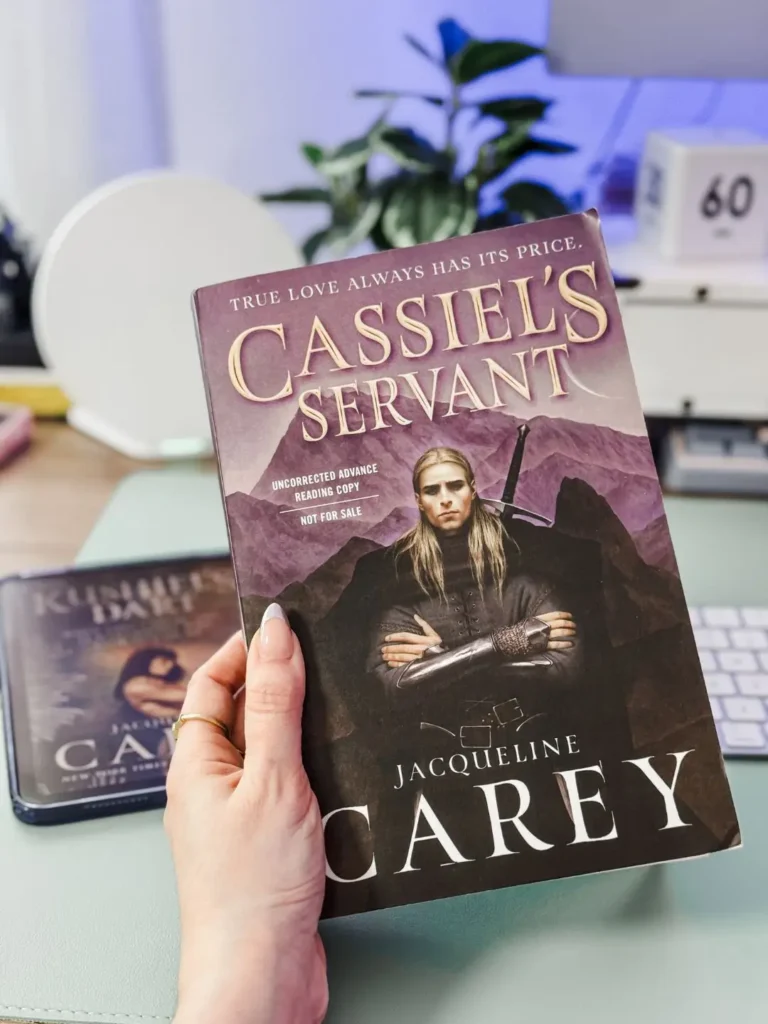
Cassiel’s Servant retells Kushiel’s Dart from Joscelin’s point of view, and it is the one book in this readalong I am reading for the first time, right alongside you. Carey told me she swore for years she would never write it, then a charity asked her for something personal and she ended up writing an Elizabethan sonnet from Joscelin to Phèdre. Putting herself in his head for the first time was, in her words, unexpectedly intimate, and it changed her mind.
The household rule while she wrote it was a question: does Joscelin give a damn? All the intrigue and opulence and couture that Kushiel’s Dart lingers on, Joscelin simply does not care about, so she cut it. The result is a leaner, more accessible book. If Dart’s density worries you, Carey herself points to Cassiel’s Servant as a gentler door into the world. For our readalong we are starting where it all began, with Dart, but it is good to know the other entrance exists.
What stuck with me most was what she said about voice. Phèdre, she reminded me, is not a fully reliable narrator. She draws a veil over the moments that matter most to her emotionally. Joscelin does not.
“He knows how he feels about her way before she’s figured it out.”
“Let it wash over you”
If you are intimidated by these books, and I was, this is the part of the conversation for you. I asked Carey directly what she would say to a reader struggling to get into the series. Her answer was the most reassuring thing an author has ever said to me about her own work.
“Just let it wash over you, because it ultimately will become clear, and you don’t need to retain all the details. That’s what Phèdre’s for. She’s doing it for you.”
You do not have to memorize the houses and the angels and the politics. The book is built so that you can sink into it and let understanding arrive on its own. That single piece of advice is most of the reason I felt confident building a readalong around these books. You are not supposed to white-knuckle them. You are supposed to be carried.
Love as thou wilt
The precept at the center of Terre d’Ange is Blessed Elua’s commandment, “Love as thou wilt.” It reads at a glance like permission, like license. Carey wanted me to understand it is also an instruction.
“It is also a commandment to love. The idea that love is a force with divine agency in this world is something I think we all very much want to be true, and I wrote this book as though it were quite literally true.”
We ended on legacy. Carey is sixty-one now, and she told me she thinks about it differently than she did at thirty-six, when the first book came out. She has cried at signings because readers told her what Phèdre meant to them. The reason we are still talking about these books, she said, is the readers, full stop. Twenty-five years in, she is both proud and humbled by that. So am I, frankly, and I have only been living in this world for a fraction of that time.
This Jacqueline Carey interview was a long time coming
I met Jacqueline Carey back in 2012, years before I worked up the nerve to start this series. I had only read her other urban fantasy work at the time. And I remember the passion of everyone in line with me for Phedre and talking to fans about what that series had meant to them. I knew I had to dive into it.
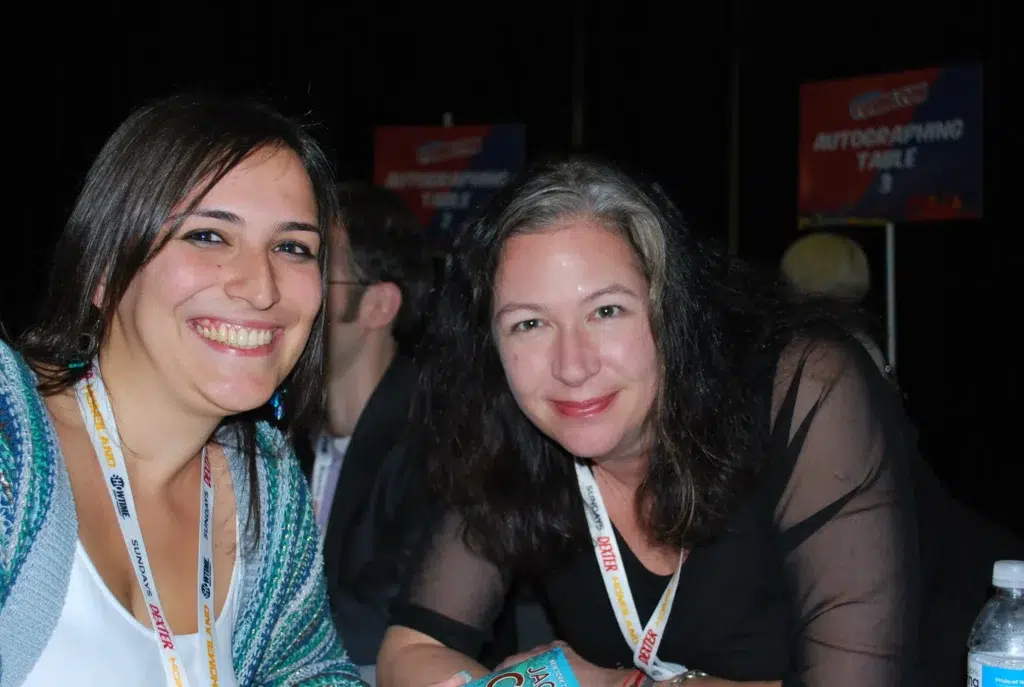
I came to these books late and intimidated, like a lot of you maybe will, and they became one of the most epic adventures I took in my reading journey. So getting to sit down with her for the twenty-fifth anniversary closed a loop I did not expect to close.
Read it with me
We are excited to launch the Kushiel’s Legacy readalong. If this Jacqueline Carey interview made you want to finally pick up the series, or reread it with people who get it, come do it with us. We are reading the original trilogy plus Cassiel’s Servant, one section a month, over a year, with monthly podcast episodes and a community over on Discord.
Full details and the schedule are on the Kushiel’s Legacy readalong. If you want to get the lay of the land first, the Kushiel’s Legacy reading guide walks you through the world with no spoilers.
I will leave you with the warning Carey gave me when I told her I was hosting this. I asked what readers should watch out for. She said, “There are gonna be a few points where you hate me.” She is right. Sign up anyway.
Pin It for Later