The History of Vampire Romance Novels Before Twilight and Dark Lover

This post is part of the Once Upon a Genre series, where we dig into the history, evolution, and DNA of romance books. Because understanding where things came from makes you love them even more.
I went down a rabbit hole while researching my J.R. Ward video and the vampire personal curriculum, and I came out with a history of vampire romance I only half knew. In my head, the vampire romance novel showed up in the 2000s, rode the Twilight wave and took over. The genre is older than that of course, and the road it took to get to Dark Lover was a lot rougher than I expected.
My take after all that research is simple. Readers wanted the vampire hero long before publishers believed in him. Author after author got told vampires wouldn’t sell, the books came out anyway, and readers showed up for them.
My own vampire years started in the mid 90s, when I found Anne Rice. Back then I was watching way more vampires than I was reading, between the TV shows and the movies. The books past Anne Rice came later for me, when I got into urban fantasy and finally paranormal romance in the early 2000s and started reading Maggie Shayne and Laurell K. Hamilton.
This post contains affiliate links. That means we receive a small commission at no cost to you from any purchases you make through these links.
The history of vampire romance before the romantic hero
I already covered the gothic and screen side of this in When Did We Start Romanticizing Vampires?, so I’ll keep it short here. One of my newsletter readers told me Barnabas Collins from Dark Shadows was her first vampire love, and that teenage girls came home from school to watch him. ABC was about to cancel the show, Barnabas was supposed to be killed off, and the ratings kept him around instead.
Anne Rice’s Interview with the Vampire came out in 1976, and it’s gothic horror, even if a lot of us read it and fell in love.
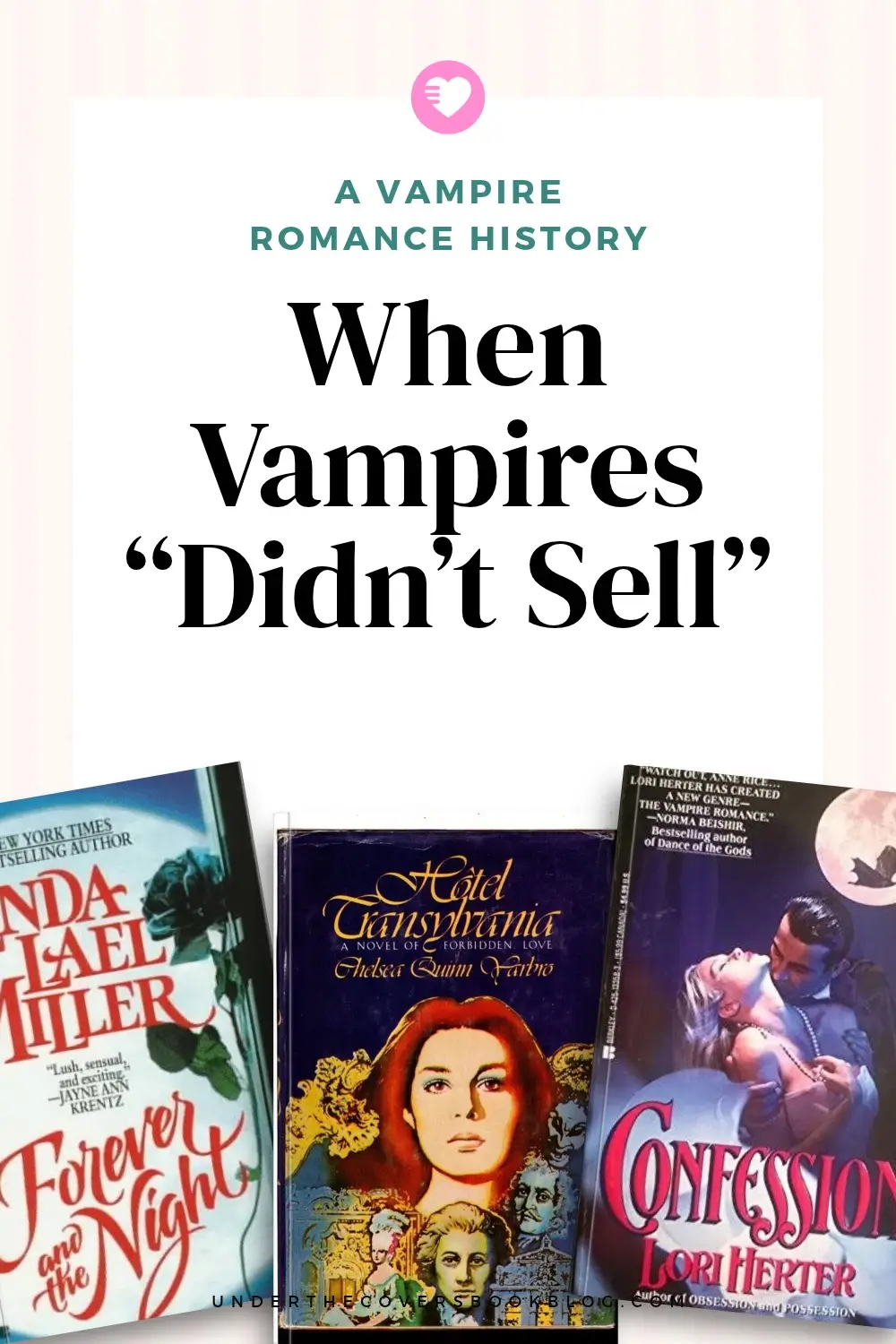
The earliest book I found that sold a vampire as a love story is Chelsea Quinn Yarbro’s Hôtel Transylvania, from 1978. The subtitle is literally A Novel of Forbidden Love. Her hero, Saint-Germain, is an immortal vampire of aristocratic birth who keeps falling in love.
It came out from St. Martin’s Press and it was categorized as historical horror and fantasy, far from the category romance. The pitch was already right there on the cover, though.
1991: Obsession lands on the romance shelf
Thirteen years later, Lori Herter published Obsession, and this is the book that usually comes up online when people ask what the first vampire romance was. Britannica calls it one of the first vampire novels to be categorized as romance instead of science fiction, fantasy or horror. It kicked off her DeMorrissey books, which ran from 1991 to 1993.
In 1992, an aspiring writer named Maggie Shayne found it, and it gave her hope that her own vampire romance could sell. She has also said that in the late 80s and early 90s, paranormal romance was a term nobody used.
1993 to 1996: Silhouette Shadows
Then a romance publisher made room for it. In March 1993, Silhouette launched Silhouette Shadows, a category line for the darker stuff, with the tagline “From the Dark Side of Love.” I love that tagline. The editor behind it was Leslie Wainger, who Shayne says had a penchant for “the woo-woo stuff.”
Maggie Shayne’s Twilight Phantasies came out in that line in October 1993, the first of her Wings in the Night books, with a vampire hero in a category romance. Shayne is one of the authors I read when I first got into paranormal romance (the later books in that same series, in fact), so finding out she was writing vampire heroes for Silhouette back in 1993 was a fun fact for me.
The line ran 66 books in 40 months. The last one, Evelyn Vaughn’s Forest of the Night, came out in July 1996, and then Shadows was done.
I’m putting together a Silhouette Shadows reading project soon, with Maggie Shayne’s book on the list, so I’ll have a lot more to say about this line once I’m reading them.
Outside the Shadows line, other vampire romances were coming out too. Linda Lael Miller’s Forever and the Night came out in 1993, the first of her vampire books, later called the Black Rose Chronicles. Her hero, Aidan Tremayne, is a wealthy vampire who yearns to walk in daylight again and he falls for a human heroine.
Amanda Ashley’s Embrace the Night followed in 1995, her first vampire romance for Love Spell. She has said she found vampires through Lestat, and then through Lori Herter.
In Herter, Miller and Ashley, the heroine can be turned, and a lot of the tension comes from that. In J.R. Ward’s world, vampires are born and a bite can’t turn anyone, so that whole question is gone.
The “vampires are dead” years
Meanwhile, the writers working outside category romance kept hearing no.
Would you like to save this?
Laurell K. Hamilton’s first Anita Blake novel took about two years and around 200 rejections, and one editor told her vampires were dead as a genre. Guilty Pleasures finally came out from Ace in 1993 as a paperback original, shelved as urban fantasy, horror and mystery. Vampires are legal citizens of the United States, and Jean-Claude ends the book asking Anita on a date.
I read the Anita Blake books when I got into paranormal romance in the early 2000s, and I had no idea the first one was turned down around 200 times. Once it sold, Hamilton says editors started asking other writers for “Hamiltonesque” books.
Christine Feehan says editors stopped listening as soon as she said the word vampire. In her words, “Nobody was doing vampires at the time I sold Dark Prince.” A friend kept pushing her to submit it, Love Spell bought it, and when Dark Prince came out in 1999, the first print run sold out in about two weeks.
Her heroes are Carpathians, an ancient race with one lifemate each. A male who goes too long without his lifemate loses color and emotion, and one who gives in to the darkness becomes a vampire. So the vampires are the villains, and every unmated hero is at risk of becoming one.
Sherrilyn Kenyon got the same treatment. Her editor cut the word vampire from her book’s description, with the reasoning “No one wants vampires. It’s a very limited audience.” That’s why the vampires in the Dark-Hunter series are called Daimons. Her heroes are immortal warriors who sold their souls to Artemis for vengeance, and the Daimons, who feed on souls, are who they hunt.
Kenyon’s fans had built a whole community online before Night Pleasures existed, and it hit #6 on Amazon before its release in 2002.
2005: Dark Lover, a month before Twilight
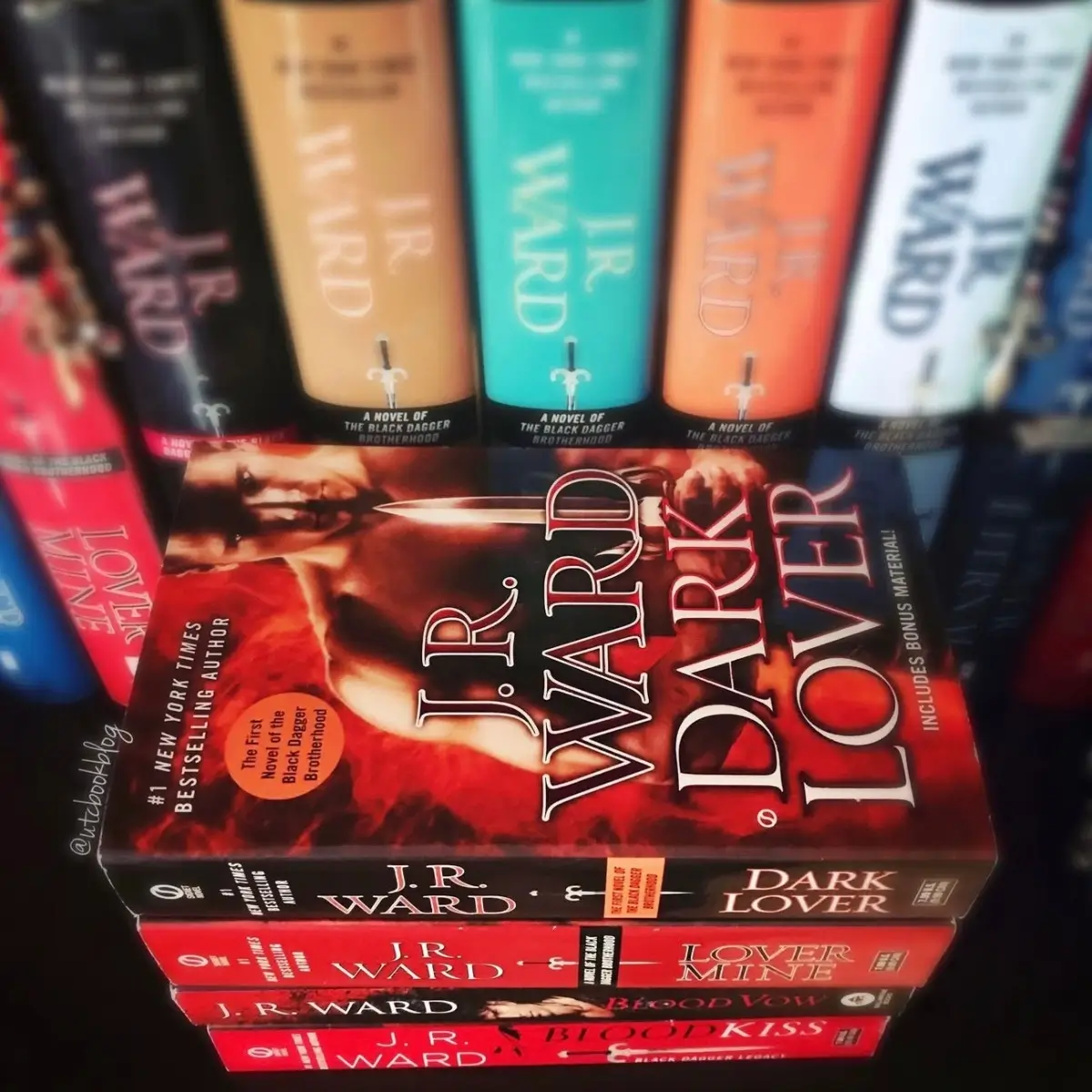
That’s the world Dark Lover walked into. J.R. Ward’s first Black Dagger Brotherhood book came out on September 6, 2005, in Signet’s Eclipse paranormal romance line. Twilight came out on October 5, about a month later.
So Twilight didn’t start vampire romance. Dark Lover came out a month earlier, and everything in this post came before both of them. But J.R. Ward marked a pivotal change in the history of the vampire romance novel.
I’ve been reviewing J.R. Ward on the blog since 2011, and the companion to this post is what she did with all of this, from the career setback before Dark Lover to the vampire rules she rewrote. You can keep on reading it in How J.R. Ward Rewrote the Vampire.
If you want to start the series, my Black Dagger Brotherhood reading order has everything mapped out.
Frequently Asked Questions
What was the first vampire romance novel?
Lori Herter’s Obsession, from 1991, is the one most often named. Britannica calls it one of the first vampire novels categorized as romance, and Maggie Shayne calls it the very first romance novel with a vampire lead. Chelsea Quinn Yarbro’s Hôtel Transylvania was already sold as A Novel of Forbidden Love in 1978, but it was shelved as historical horror and fantasy.
Did Twilight start vampire romance?
No. Vampire romance was on the romance shelf by 1991, Silhouette ran a whole line for it from 1993 to 1996, and J.R. Ward’s Dark Lover came out about a month before Twilight in 2005.
What was Silhouette Shadows?
A Silhouette category romance line for darker, paranormal stories, with the tagline “From the Dark Side of Love.” It published 66 books between March 1993 and July 1996, including Maggie Shayne’s Twilight Phantasies.
When did paranormal romance become its own category?
By the early 1990s the RITA awards had a Futuristic/Fantasy/Paranormal category, and in 2004 it was renamed Best Paranormal Romance. Maggie Shayne has said nobody used the term paranormal romance in the late 80s and early 90s.
Keep reading
For the screen side of this story, from Lugosi’s fan mail to BookTok, read When Did We Start Romanticizing Vampires? If the Anne Rice era is your thing, the Vampire Chronicles reading order is where to start. And if you’d rather read your way through all of it, my Vampire Personal Curriculum has a reading list, a watchlist and games.
For the Brotherhood itself, start with the Black Dagger Brotherhood reading order, and once you’ve caught up, I put together books like the Black Dagger Brotherhood for the wait between releases. Feehan’s Carpathians and Kenyon’s Dark-Hunters are both on my list of the best paranormal romance books of all time, and if you want something newer with that older feel, try these vampire romance books with old school paranormal vibes. If you’re new to the genre as a whole, my paranormal romance genre guide covers the basics.
Once Upon a Genre is an ongoing series at Under the Covers where we dig into the history, evolution and DNA of romance books. Because understanding where things came from makes you love them even more.
Before you go, tell me in the comments what the first vampire romance you ever read was.
Pin It for Later