When Did We Start Romanticizing Vampires?

I feel in love with a monster. Not one specific monster, but the whole species. The vampire has been my favorite since I was a kid.
A few months ago I saw a TikTok asking what the popular monster of an era says about the people living in it. And my answer came pretty fast: the monsters we love come out of whatever gives us comfort and makes us feel safe at the time.
This sent me straight down a rabbit hole, because the vampire did not start out safe. He started out as the thing that eats you. Somewhere along the way he turned into the guy who would die before he let anything touch you.
So where did we start romanticizing vampires?
Way earlier than you’d think. And it was us. Every single time, the audience fell for the vampire before the writers and the studios were ready to admit he was attractive. I was there for a good chunk of it myself.
This post contains affiliate links. That means we receive a small commission at no cost to you from any purchases you make through these links.
Before the vampire was hot
Quick history first, because you can’t see how far he came without knowing where he started.
In village folklore, the vampire was nothing more than a village corpse. Like a zombie. Somebody died, body swelled, there was blood at the mouth, and the neighbors thought the dead man had been out feeding. Nobody was romanticizing that.
His first glow up came in 1819 with John Polidori’s The Vampire, which is basically the original text of the vampire as you know him now. Polidori modeled his vampire on Lord Byron, the most famous bad boy in England at the time, which tells you something. It’s the first time a writer made the vampire a gentleman. Side note, if you want the gossip behind that summer, and there’s lots of it, my friend Victoria is covering bookish scandals of classic authors, Polidori included, over on Bibliolifestyle.
Then in 1897 we get Bram Stoker’s Dracula. Still an aristocrat, still a threat. He takes your blood, your sleep, your fiancee. This Dracula is more like a home invasion, not book boyfriend material. And no, Stoker didn’t base him on Vlad the Impaler. More on that soon.
1931: The first vampire crush
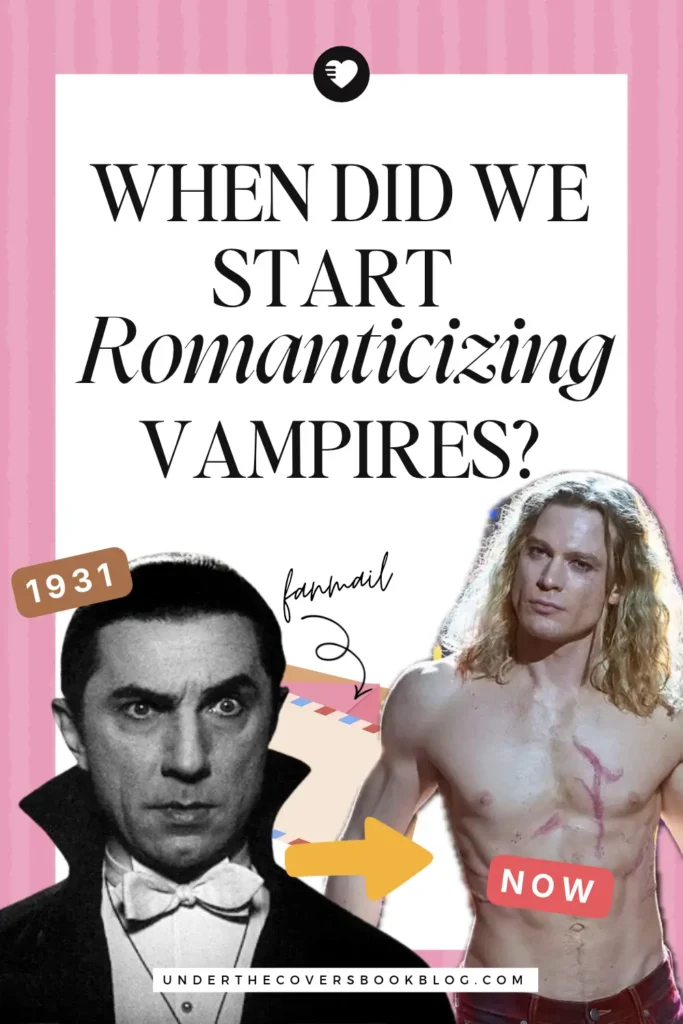
Then we get to 1931. Bela Lugosi plays Dracula for Universal, and the studio wants audiences terrified of him. But what Lugosi got instead was a pile of fan mail from women.
So if you want a date for when we started romanticizing vampires, that’s my first answer. 1931, in a movie theater, when a lot of woman watched a monster who was supposed to scare them, went home, and thought: that’s kind of hot.
And then it happened again in 1967. When I talked about my vampire personal curriculum with my newsletter readers and asked them what vampire was their first love, one of them told me hers was Barnabas Collins on Dark Shadows. And in her words: “It’s pretty bad but very gothic. A lot of teenage girls rushed home from school to watch it on weekday afternoons”. I went looking for more on this show and Barnabas was brought in as a villain. The plan was to write him out after a short run, but the audience wouldn’t let them. He stayed, the show built itself around him, and once again the people watching decided he was worth loving before the people writing him did.
The monster version never fully goes away, by the way (even today). I still remember going to the theater in 1998 to watch John Carpenter’s Vampires, where the whole movie is a crew of hunters exterminating vampires. But in the same decade, late ’90s, romance is starting to creep in. So both version of the vampire exist at the same time. And they have since then.
The fan mail of 1931 is a crush. But what happened after that, especially in the ’90s, is a full relationship. I will break romanticizing vampires into four stages. And the history is what covers the first stage, the monster, because everybody needs an origin story.
Just know, a lot of these stages overlap and this is all my theory on it. Let me know how you feel about it. I started reading and watching vampires and hunters since the late ’90s and I never stopped. Whether they were scary monsters or romance heroes alike.
Anne Rice and the in between transition period
Before we get to stage two, I want to stop on a period I think was crucial. I call it the Anne Rice period, and it doesn’t really fit in a stage. It’s also the closest thing to a real answer to the question I was asking at the start.
I read Anne Rice in high school in the ’90s, and in my head she’s an urban fantasy author in a lot of ways. Modern vampires, a real city, a whole society living underneath ours. The genre just didn’t exist yet back when she was writing, so she’s considered a gothic horror author, and yes there’s plenty of that. The distinction matters in my head because we will talk about urban fantasy in a little bit.
Interview with the Vampire (book) came out in 1975 and Anne Rice was not writing a romance. Louis is miserable. Lestat is a menace. It’s a book about what it costs to be a monster told by the monster. I find the psychology of getting inside the monster’s head fascinating.
But what fascinates me most is that readers, myself included, fell in love anyway. We saw the love story of Louis and Lestat and we fell for the vampire himself. I mean, we all love Lestat, right? Pretty universal experience.
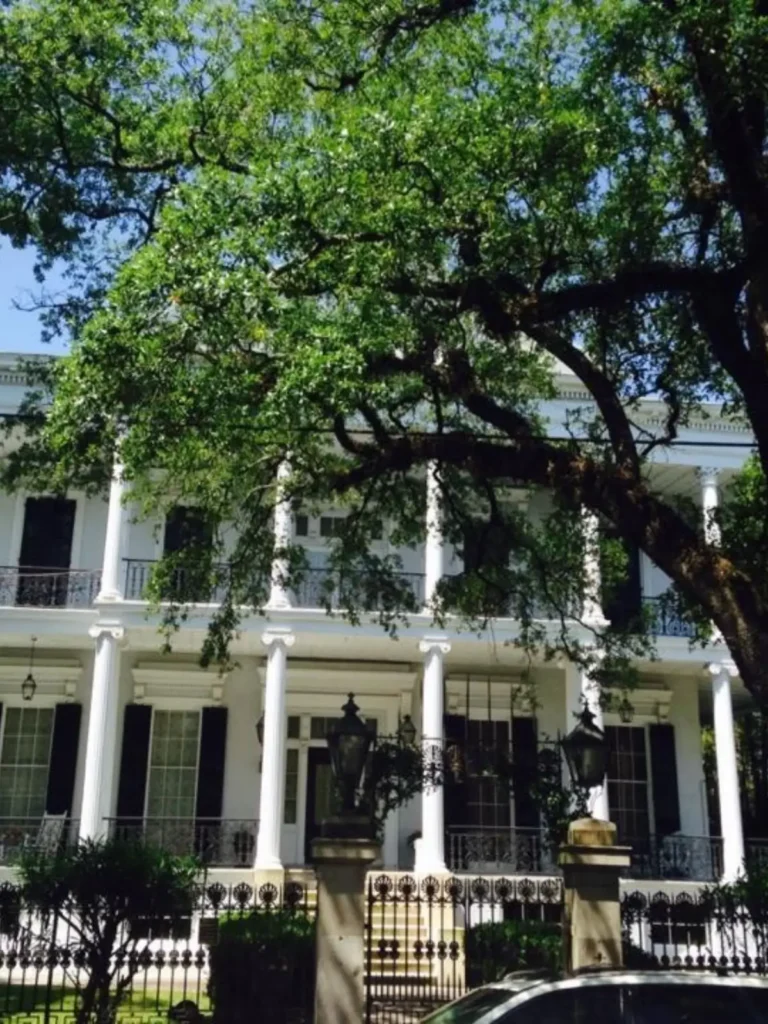
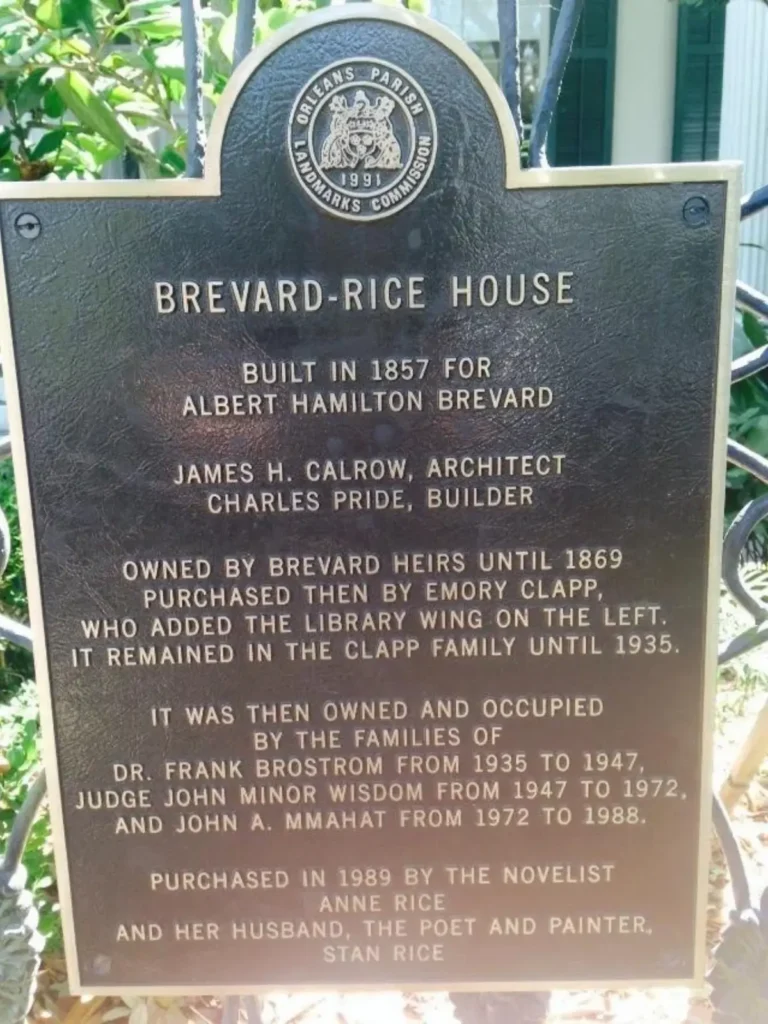
Then in 1994 the movie came out, with Tom Cruise, Brad Pitt and Kirsten Dunst. Excellent cast, excellent movie and a pivotal moment in my own vampire journey. I was completely obsessed. I wanted every vampire thing I could get my hands on, and it put New Orleans on my list of places I had to see before I died. I made it there in 2014.
Then the Anne Rice journey continued with Queen of the Damned in 2002, a movie I will defend to no end. Lestat and Akasha are still monsters, written by monsters. And yet, we fell in love with both of them.
That’s why Anne Rice matters so much. It’s where we, the audience, started building fandom communities around romancing these characters. I’m sure fan fiction was being written and passed around in fanzines back then.
If Rice is where you want to start, here’s the Vampire Chronicles reading order you’ll need, or if that’s what you love check out more books like Interview with the Vampire.
Stage two: restraint
By the mid-’90s things had caught up a bit. The first thing the writers did when they decided to make the vampire a romantic interest was have him show restraint. He’s still a monster, so he has to restrain himself from hurting the people he loves.
Perfect example of that is Buffy the Vampire Slayer in 1997. Of course Angel is the love interest, he has a soul and is a vampire who’s sorry he’s a vampire. The romance is all about him not wanting to hurt anyone and not wanting to turn back into a monster. He gets his own spin off in 1999.
Then, from the massive success of that, we get Twilight in 2005. Edward actually has A LOT in common with Angel, except he comes in a sparkling package. The tension is that he wants to kill her but he doesn’t.
Stefan and Damon in the Vampire Diaries also have to show restraint. I read those books back in 2005 before the show came out. That was out in 2009. By the way, the show is better than the books, it’s also completely different than the books.
Now with Twilight, the movie, out in 2008 and The Vampire Diaries show in 2009, we’re hitting peak vampire media. But every one of these vampires has to restrain himself to keep from being bad. The monster is right under the surface, waiting to come out, and he has to keep taming it.
This is the era of the vampire who has to protect you from himself.
Stage three: the vampire partner
This is particularly a favorite of mine. What changes here is that the story is usually about a woman who is a badass and doesn’t need saving. She doesn’t need him to control himself because she can take him on. This is especially true in urban fantasy.
Anita Blake by Laurell K. Hamilton which actually start back in 1993. A true pioneer. Anita raises the dead for a living and has a license to execute vampires and Jean Claude can’t get a straight answer out of her. She’s always in charge.
L.A. Banks’s Vampire Huntress series started in 2003. Damali is a vampire hunter and the vampires come to her.
And who can forget Underworld? The franchise started in 2003 and Selene is the vampire. She’s the one with the guns, a badass, but she also makes you feel for her at the same time. Iconic.
Then there’s Sookie Stackhouse. Charlaine Harris’s Dead Until Dark came out in 2001. This is the series that got me back into reading after years of not reading at all. Sookie is a waitress in small town Louisiana who can hear people’s thoughts. Then she meets a vampire, Bill. She has feelings about him. Then meets Eric and a whole world of supernatural problems. It’s such a great series to follow, especially at the beginning. Some of the later books, maybe not so much. It was adapted into a fabulous show, True Blood, on HBO in 2008 as well. I loved that show.
Halfway to the Grave by Jeaniene Frost comes out in 2007. Cat is a half-breed, Bones is a full vampire, and they fight side by side, hunting the bad ones. That series also gave us Vlad, who yes, is exactly who you think it is, and he’s one of my all time favorite heroes. He’s intense, he delivers everything you’d expect from the monster side of Dracula, but he’s truly a romantic lead. He would burn the world down for the woman he loves (and his friends). If you want to start this series, check out the Night Huntress reading order.
In that same vein, a series I almost never see anyone talk about: Jaz Parks by Jennifer Rardin, also came out in 2007. Jaz is an assassin, the vampire Vayl is her boss, and they hunt as a team. It’s bittersweet because it’s so reminiscent of Night Huntress that it could have had the same popularity. Sadly the author passed away before she could finish it.
On the funnier side, there’s MaryJanice Davison’s Undead and Unwed starting in 2004. Betsy wakes up and finds out she’s been turned, and mostly is upset about her shoes. There’s a love interest and so many funny moments. Sinclair has to keep up with her and she takes him on a wild ride.
So this stage shows the vampire as a love interest but you get to work with him, argue with him and then decide whether he gets to stay or not. Nobody’s being rescued because these heroines can take it as good as they give it.
Stage four: the vampire protector
Finally at the last stage, which is a second favorite for me, is when paranormal romance truly arrives. Like I said before, some of these stages may overlap because they were transition periods.
Would you like to save this?
We can see the first Black Dagger Brotherhood book, J.R. Ward’s Dark Lover, which came out in 2005. It’s about a brotherhood of vampire warriors who spend every night patrolling a city, keeping humans and their own people alive. Now the vampire is the romance hero. He’s fighting evil, he’s protecting his fated mate, he’s the good guy. Check out my Black Dagger Brotherhood series reading order if you want to get into this one!
And it didn’t just happen in the intense, super alpha books. It happened in the lighter, funnier ones too. Like take Lynsay Sands’s Argeneau Vampires or Kresley Cole’s Immortals After Dark. And there were more super alpha series like Lara Adrian’s Midnight Breed. These were all booming in the mid 2000s
They are intense, action packed, the heroes are very alpha, but even if some may say they’re a bit dark, they’re not really. The whole point of an alpha in these books is that he’s on your side and you have nothing to fear.
So now look at what this hero actually offers you. Most of the time, he’s rich. He can’t die. He can’t be laid off. He has chosen one person as his fated mate forever. And sometimes, there’s a whole brotherhood of them behind him, taking care of the heroine.
The scary part didn’t go away but it’s pointed at what is putting you in danger.
Why did it explode in the 2000s?
So we started in 1931, kept it going through the Anne Rice period and really started to have a romance relationship with the vampire in the late 90s. But why did it explode in the 2000s specifically?
Here’s my theory. Look at what the 2000s were. We started the decade with 9/11 and two wars and we ended it in a recession. That’s the bookends of the decade the vampire took over.
The whole decade was anxious. I was there and I felt it. There was a lot of uncertainty about safety, about the future, about money. When the crash finally came, it was just the floor falling out and we could run and hide into these books where there was an answer to those fears.
My read on this is that when everything feels like it can be taken away, you fall in love with the one thing that can’t be. Your job can go. Your house can go. The vampire that has been through 400 years and has seen everything will probably still be here. And he’s made plenty of money in that time to get through the storm. Now he’s decided you’re his fated mate and he’s going to protect and spoil you, so it seems like an obvious choice.
So that’s my answer to that TikTok. The monster an era fall sin love with comes out of what makes people feel safe at the time and in the 2000s, peak vampire media, safe looked like someone who wasn’t going anywhere, who could protect you and who was financially set so that none of the mess outside could touch either of you.
When that need ran out
You can also see the decline of the vampire. True Blood ended in 2014. In October of that year Universal released Dracula Untold, which I love. It takes Dracula himself, the original monster, and turns him into a man who becomes a vampire to protect his family and his people. It’s the stage four fantasy going full circle to one of the first modern vampires. It never got the impact that it could have had if it had come out in 2009. The audience was moving on.
Back to Rice and BookTok
In 2022 AMC’s Interview with the Vampire made Louis and Lestat’s love story explicitly romantic (even if toxic) on screen, and I love that adaptation. In some ways it makes the original story easier for a lot of people to take in.
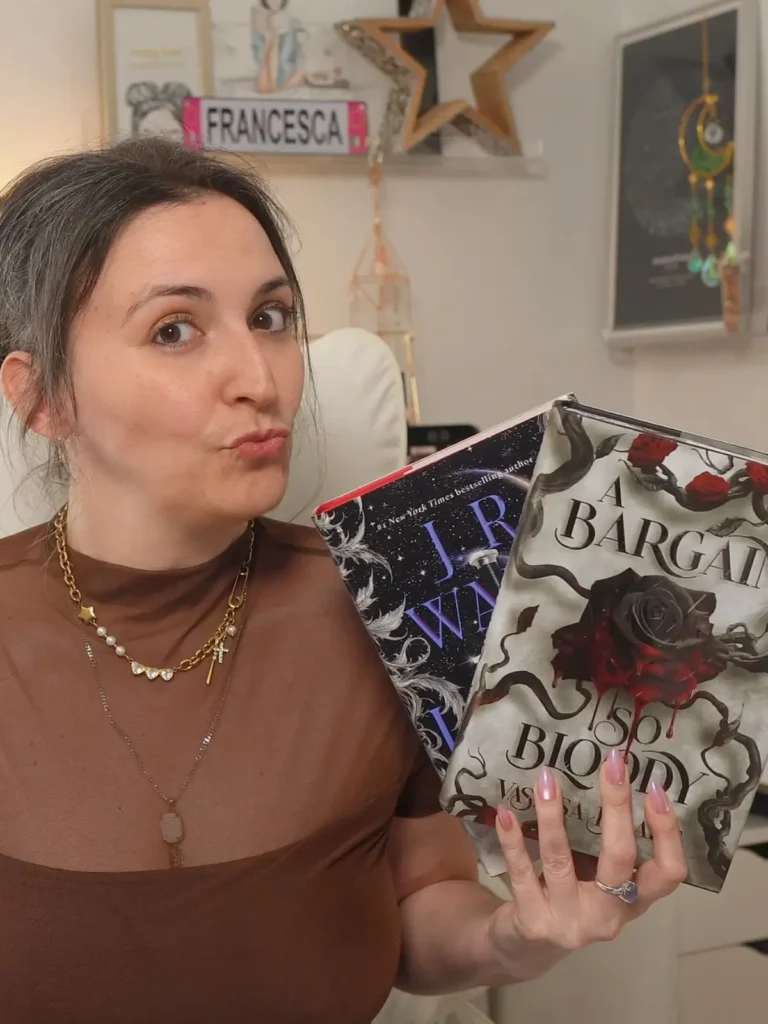
That show was also a sign the vampire was making a comeback. A few years before BookTok blew up with From Blood and Ash by Jennifer L. Armentrout’s original take on vampires. And we’ve seen that popularity only grow in the past few years to massive success like A Bargain So Bloody by Vasilisa Drake.
BookTok is embracing the vampire again. This time, though, the vampire isn’t at the top of the list of monsters people in general are falling for. It’s a different time with different things going on, and maybe we need a little more than a vampire to come and save us now.
So when did we start romanticizing vampires?
In my opinion, in 1931. Starting with that Bela Lugosi movie, the fan mail and the crush, and then he went through all these stages before anyone was willing to make him the lead love interest of the story. We had to watch him restrain himself and fight the monster inside. Then he became a partner you could work with. And then, finally, he became the protector and love interest you could fall for.
We basically made the vampire hot in our heads and fell in love with these characters, and then the writers and producers thought: if that’s what you want, let me give it to you.
If you want to make a whole month out of reading and consuming vampire media, I put together a Vampire Personal Curriculum with a required reading list, a watchlist, games and free resources. You’ll have lots of fun with this one!
But I want to hear from you in the comments. What do you think about my stages and who was your first vampire love?
Pin It for Later