Who Was the Real Dracula? Vlad the Impaler and the Myth Everyone Repeats

Suzanne wrote the original version of this post years ago asking who was the real Dracula: the tortured man looking for love or the sadistic monster. As I went down a vampire rabbit hole, I went back to the original question and dug a little deeper. Some of what everyone repeats about Vlad didn’t hold up, and the biggest question, whether Bram Stoker actually based Dracula on him, turned out to be a real debate.
When you think of Dracula, you probably picture one of two men. The monster out for blood or the broody, misunderstood one who’d burn the world down for the woman he loves (this coming from a Jeaniene Frost Vlad girlie). Which one you picture depends on what you’ve read and watched. But the real man behind the name is stranger than both.
This post contains affiliate links. That means we receive a small commission at no cost to you from any purchases you make through these links.
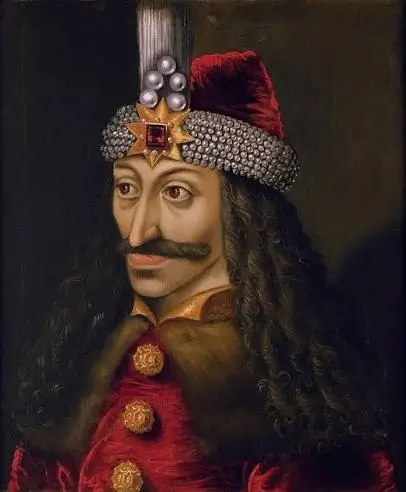
The basics about Dracula
Name: Vlad III, Prince of Wallachia (a region in what’s now southern Romania)
Born: around 1431
Died: late 1476 or early 1477
Family: an older brother, Mircea, an older half brother, Vlad the Monk, and a younger brother, Radu the Handsome. His father, Vlad II, was a member of the Order of the Dragon, a Christian order created to protect Christianity in Eastern Europe.
Where did his names come from?
Dracula translates to “son of the dragon.” He got it because his father was a member of the Order of the Dragon, which earned his father the name Dracul, “the dragon.”
You’ll often read that the name has nothing to do with the devil. That’s half the story. It started as dragon, but in Romanian dracul also came to mean “the devil,” and that stuck to his reputation. The devil meaning is also the one Bram Stoker read, four hundred years later. Hold on to that thought, because it comes back later.
It was only after his death that he was really known as Vlad Tepes, Vlad the Impaler, named for his very real habit of impaling his enemies.
What turned Vlad into a Legend?
He was a well-educated boy, taught philosophy, science and math as well as warfare. Then in 1442, as a boy somewhere between eleven and fourteen (his birth year isn’t certain), he was handed to the Ottomans as a political hostage along with his little brother Radu, to guarantee their father’s good behavior. Radu took to Ottoman life and spent most of his in that world,, later ruling Wallachia as the Ottoman’s own candidate. Vlad never did.
You’ve probably heard the dramatic version of what came next: starved, beaten and kept in a cell that looked out onto an execution ground, watching people die, often by impalement, until it drove him mad.
There’s no record of it. The sources say the brothers were held to keep their father in line and that neither was harmed. That cell was added in the 20th century, five hundred years after the fact, by people who needed him to have a reason for what he became.
Mircea, and the revenge
In 1447, his father was killed, and his beloved older brother Mircea was blinded with a red-hot poker and buried alive.
Most retellings blame the Turks. It was actually the boyars and merchants of Târgoviște, Wallachia’s own nobility. That correction matters more than it looks. Years later, Vlad’s most infamous act was the mass impalement of the Târgoviște boyars, and historians usually read it as revenge for exactly this. Blame the Turks for Mircea and you erase the motive for the most famous thing he ever did.
He wasn’t released from prison and escaping home, either. In 1448 the Ottomans sent him back and installed him as prince of Wallachia, as their candidate. That first reign lasted weeks, and he spent the rest of his life fighting the people who’d put him there.
A hero and a monster
From then until his death, Vlad’s life was marked by his war with the Ottomans and his determination to hold Wallachia. His big reign ran from 1456 to 1462, and that’s where the legends come from: a bloody, ruthless, ferocious ruler who impaled his enemies and terrorized his own people. Historians still argue about the body counts. In 1462 the Hungarian king, Matthias Corvinus, had him arrested, and he spent about twelve years as a prisoner. He got one more short reign in 1476 and died fighting the Ottomans soon after.
In Romania he’s a national hero, the prince who never stopped resisting an empire. That’s not how the rest of the world saw him.
The monster was made by a printing press
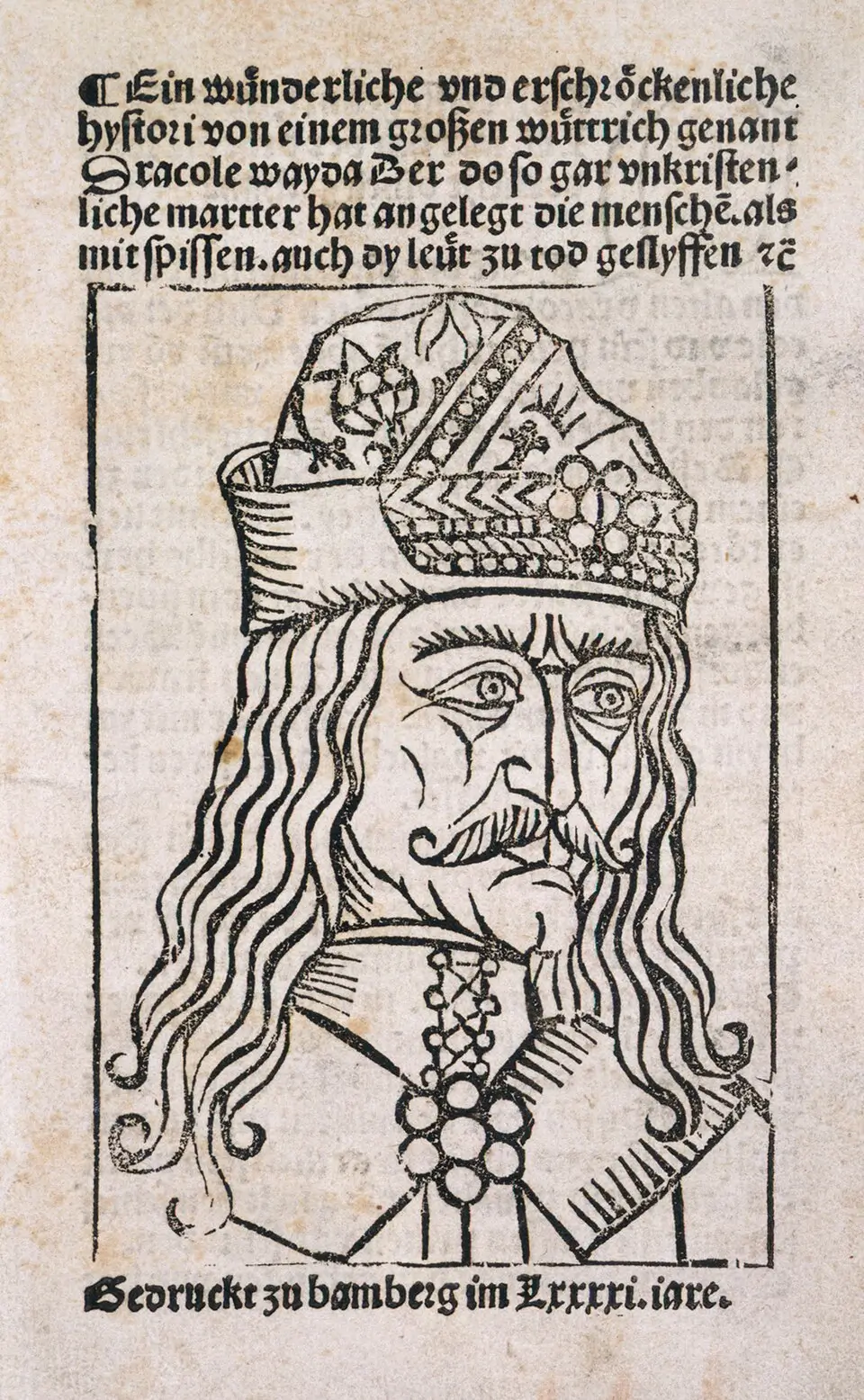
You’ll often read that after his death, pamphlets and books exaggerated his deeds. That’s true and it actually undersells it badly.
The earliest stories about him are propaganda and they were some of the first mass market products of the printing press:
Would you like to save this?
- In the winter of 1463, while Vlad was alive and locked up in Hungary, a poet named Michael Beheim performed a poem about his cruelties at the Habsburg court.
- Before 1480, stories of his atrocities were being printed in Low German across the Holy Roman Empire.
- Around 1488, a Nuremberg printer put out Dracole Wayda, a pamphlet with woodcut portraits of him.
- Those pamphlets kept circulating across Central Europe into the 1530s.
Who made them? Largely the Transylvanian Saxons, whose merchants towns Vlad had attacked, and people around Matthias Corvinus, the king who’d locked him up for twelve years.
Gutenberg’s press dates to the 1450s. Within about thirty years, Europe was using it to turn a foreign prince into a monster, illustrations included. So the better question is who needed him to be a monster, and what they printed it on.
So did Bram Stoker base Dracula on Vlad?
When I went digging, I found out people who study this for a living genuinely disagree, so here are both sides:
The case that he did:
- Stoker found the name in William Wilkinson’s 1820 account of Wallachia and Moldavia, which he read in a library in Whitby in 1890. Wilkinson writes about a voivode called Dracula who crossed the Danube to fight the Turks. That’s Vlad’s family.
- Stoker put that history in the book. Van Helsing says the Count “must, indeed, have been that Voivode Dracula who won his name against the Turk.” The Count also brags about his ancestors fighting the Turks.
- Some researchers, like Hans de Roos, argue Stoker’s research did include Vlad and his father, just without their first names. The connection was first proposed in 1958 and became famous with Rady Florescu and Raymond McNally’s 1972 book, In Search of Dracula.
The case that he didn’t, or not much:
- Stoker’s working notes for the novel survive, and they never mention Vlad by name, impaling, or any of the atrocity stories. Wilkinson doesn’t mention them either.
- What Stoker copied down was a footnote saying “Dracula” meant “devil.” That’s the meaning he seems to have cared about.
- None of the Impaler legends made it into the novel, and Stoker never went to Romania. Scholars like Elizabeth Miller, author of Dracula: Sense and Nonsense, argue he knew very little about the real man and borrowed a name and some scraps of history.
Here’s how I take all of this. Stoker clearly borrowed something from Vlad’s family. The name and the idea of a warrior prince who fought the Turks. The Impaler, with the stakes and the legends, didn’t make it into the book. Let me know what your take is in the comments.
So who was Dracula in the end? A Christian crusader, a monster, a freedom fighter, a hostage, a tyrant. He was probably all of those things, depending on who was telling the story and what they needed from him. Which fits my whole theory about vampires: every era makes the monster it needs. More on that in when we started romanticizing the vampire.
In the mood for some Dracula?
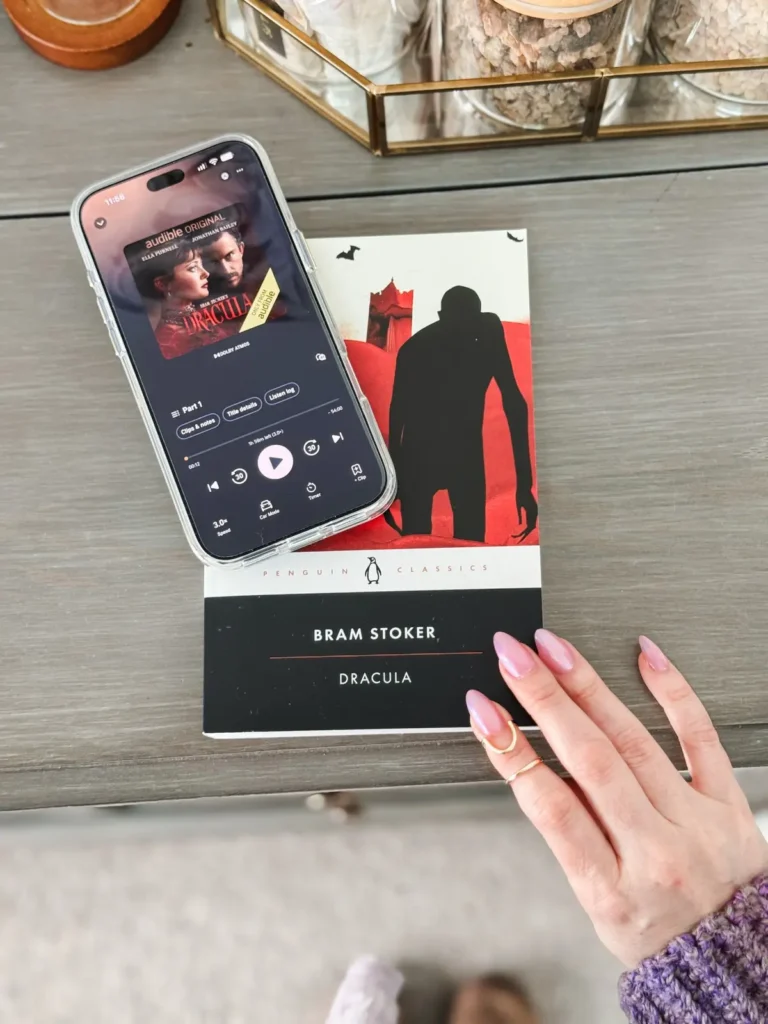
If you want more of Dracula as the bad guy, then obviously read Dracula by Bram Stoker. The new audiobook (with Jonathan Bailey!!) was so good, and this is part of my vampire personal curriculum. You can find links there for ways you can read it for free, including one that sends it to your inbox on the days it happens. Or you can check out Midnight’s Daughter by Karen Chance, where Dracula’s niece Dorina hunts her own family.
However, if you want misunderstood Dracula, I recommend Once Burned by Jeanine Frost. Her Vlad is one of my favorite heroes of all time, I’m not even joking. It is best read in the right order within the Night Huntress series. But his spin off could stand alone if you really wanted to. This Vlad would burn the world down for the woman he loves and for his friends.
But tell me in the comments, what are some of your favorite books about Dracula?
Pin It for Later