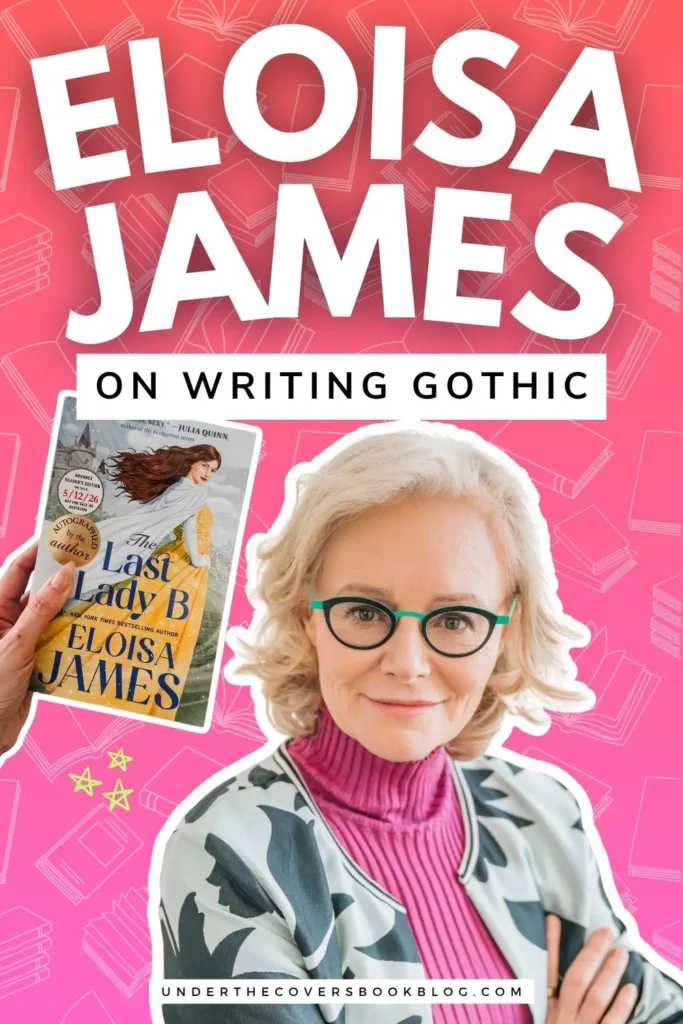
The Last Lady B: Eloisa James Goes Gothic

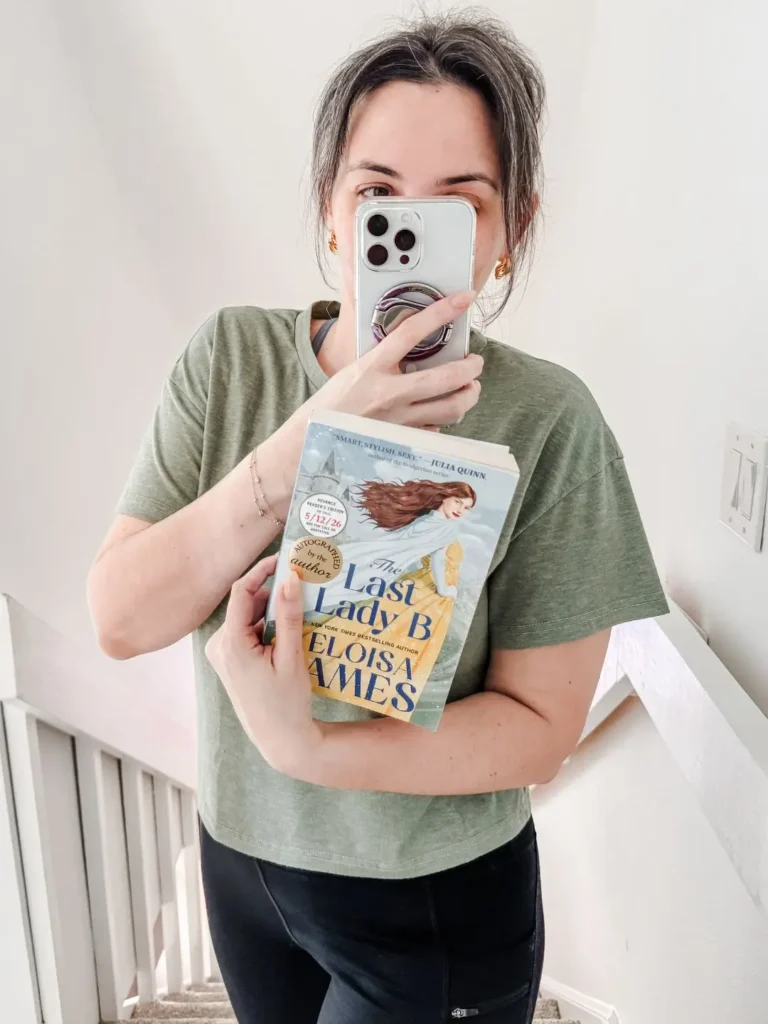
Eloisa James has built her career on wit, banter, and heroines who refuse to behave. She’s one of those must-read authors in historical romance who somehow keeps finding new angles thirty books in and The Last Lady B is her latest proof. She decided to try something different: a haunted abbey in the Scottish Highlands, a heroine with a pet piglet, and a dead husband who maybe deserved it. The Last Lady B is gothic-adjacent, as Eloisa calls it herself, and I’ll tell you upfront: the gothic actually lands. This isn’t a dark castle used as wallpaper while the characters ignore it. The mystery pulls you in, the legal trap Evie finds herself in… a virgin widow with a dead husband’s secrets and no rights to speak of, and the humor makes it hit even harder. The household is chaotic and funny and oddly cozy. And then the floor drops out. Below, Eloisa herself explains exactly how she got here.
This post contains affiliate links. That means we receive a small commission at no cost to you from any purchases you make through these links.
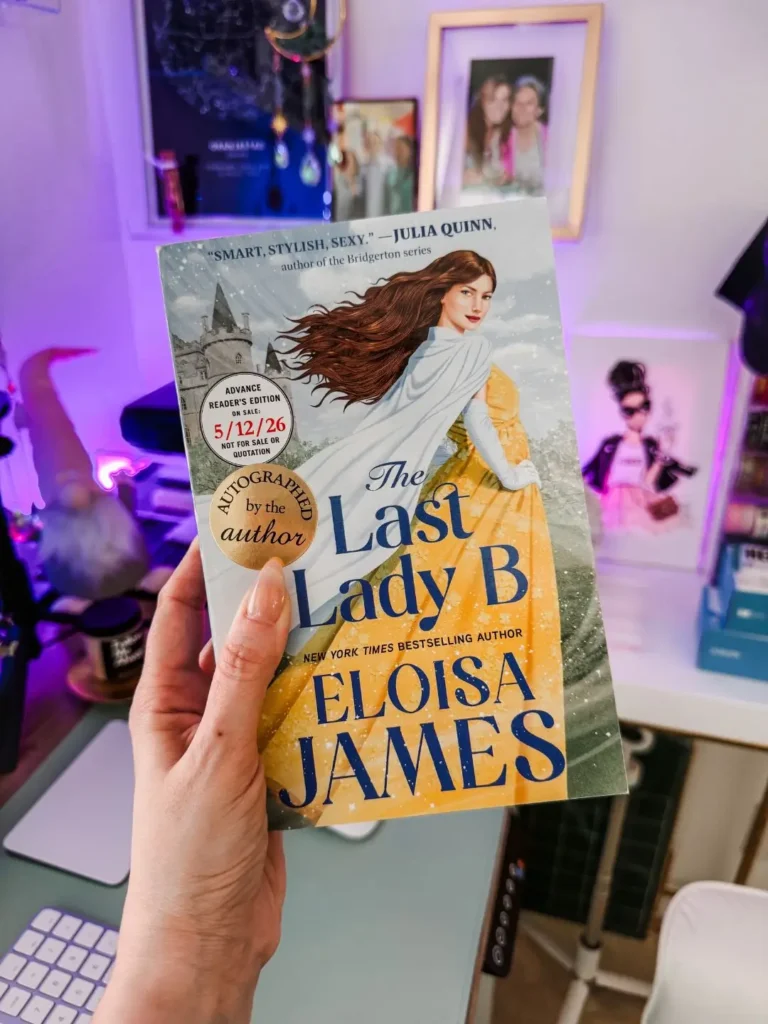
About the book
Lady B may have married Bluebeard; she may have fallen in love with a gorgeous, grumpy solicitor; she may have met a ghost and survived to tell the tale! New York Times and USA TODAY bestselling author Eloisa James delights with witty historical romance with a gothic twist.
In the depths of winter, Lady Genevieve Hughes, her pet piglet, and her septuagenarian husband travel to a haunted abbey in the Scottish Highlands. Evie is excited to meet a ghost (perhaps one of her husband’s three previous wives), but didn’t expect the funny, quirky guests to become the friends she’s never had. And she certainly didn’t imagine meeting Sir Godric Everly, a sardonic, witty solicitor who loathes her husband.
Yet as secrets and lies turn Evie’s world upside down, Sir Godric becomes the one person whom she can trust.
When ghosts, multiple wills, and a shocking marriage certificate bring Lord Burnsby’s past crashing into his present, Burnsby promptly dies, leaving Evie free to remarry…though as a virgin wife, now a virgin widow, she is more unnerved by the marriage bed than a spectral visit.
More importantly, she has to figure out whose identity is false, whose vows are dishonorable, whose truths could destroy her reputation—and where her heart belongs.
She Married Bluebeard. She Bought a Piglet. She has No Regrets.
A few years ago I became obsessed with gothic novels—and determined to write one. Frankly, the idea of rethinking my practice after thirty-six historical romances was terrifying. Creating a brooding hero would be easy… but putting one of my heroines in danger? Writing in first person? What about shocking reveals, hidden wills, talking portraits—and ghosts?
An Eloisa heroine trades witty banter with a handsome (broody) man while waltzing under a candlelit chandelier. If she encountered a murderer, she would swing a poker at his head, rather than running into a storm in her nighty.
To be frank, if my heroines are in danger, it’s from too much boinking.
Paranormal novelists have it easier. They don’t even have to signal the genre. If you read Ali Hazelwood’s werewolf-vampire romance, Bride, did you realize it was a gothic? (gruff hero/heroine isolated/danger all around: check/check/check!)
Contemporary authors often write in first person, but they face a challenge historical romance writers dodge: cell phones pose a challenge to the unearthly silence and isolation of a gothic!
I thought up a spooky set-up right away. My heroine Genevieve, or Evie, sets out for a Christmas party in Scotland, held in an abbey where three ghosts supposedly pace the battlements.
Evie is perfectly aware that she might be heading into danger—because she’s read so many gothics. She’s dying to chatter with ghosts, and marks off gothic elements as she encounters them: haunted abbey (check!); housekeeper (check!); midnight-haired, irascible villain (check—oops, Godric is the hero).
Would you like to save this?
On the road to the abbey, Evie rescues a piglet whom she names Peony. A small dog might be acceptable , but a piglet is vulgar—and that’s the moment when an Eloisa novel meshes with a gothic. After all, why shouldn’t a lady be vulgar? For that matter, why should a black-haired, scowling man be the villain?
Obviously, Godric is not the villain. My ghost is not in the heroine’s imagination, and the danger she faces isn’t imaginary, either. At the same time, Evie falls in love in an Eloisa fashion—by bantering with a broody hero.
One surprise follows another after Evie enters the abbey, beginning with a shock that rocks her to the toes. This never happened in any novel she read, nor in real life either.
Followed by more of them because…
The Last Lady B is a gothic!
I’d love to know what you think of my first excursion into a genre I’m labeling “gothic-adjacent.” You can find me on Instagram, Facebook, Tiktok, and my Facebook group, Lindow Castle, where I often go Live on Saturday afternoons. Please join us!
Why The Last Lady B Belongs on Your Gothic TBR
I read an advance copy of The Last Lady B and I’ll tell you straight: the gothic-adjacent label undersells it. The haunted abbey has real stakes and a great mystery, and the way Eloisa weaves in Evie’s legal vulnerability as a woman, the dowry trap, the terrifying reality of having no rights if your husband decides to be difficult, gives the whole book an edge that then the humor makes more impactful. The household is chaotic and funny and full of quirky characters. All that together, that’s the trick she pulls off here.
The Last Lady B is out now. You can grab The Last Lady B on Amazon. If this is your first Eloisa James, our interview with her about historical romance is a great place to start. And if the gothic-adjacent angle is what pulled you in, our guide to gothic romance goes deeper on the genre and what makes it work.
Pin It for Later