

Stop Letting BookTok Confuse You: Genre vs Subgenre vs Trope

This beginner-friendly guide to genre vs subgenre vs trope shows you what each term actually means, why they get mixed up, and how to decode book labels fast.

Category vs Genre vs Subgenre vs Trope: The Simple Funnel That Explains Book Labels
If you’ve ever searched for a book and ended up in a comment war over what it “counts” as, welcome. This is the part of reading culture where everyone is technically speaking English, but nobody is using the same dictionary.
Someone says a book is a romance. Someone else says it’s women’s fiction with a romantic subplot. A third person calls it “cowboy romance,” but the book is set in Manhattan and the love interest just owns a ranch he never visits. Meanwhile the retailer has it tagged as romantic suspense because there’s one ominous sentence on the back cover.
That confusion isn’t because you’re bad at genres. It’s because people are mixing four different labeling systems and treating them like they’re interchangeable.
They’re not.
Here’s the easiest way to understand it without needing a flowchart you’ll ignore: think of book labels like a funnel. Broad at the top, specific at the bottom. The farther down you go, the more precise you get about what you’re actually signing up to read.
This post contains affiliate links. That means we receive a small commission at no cost to you from any purchases you make through these links.
Category vs genre vs subgenre vs trope in one funnel
Here’s the hierarchy:
Category → Genre → Subgenre → Tropes
Category is the big shelf. Genre is the promise. Subgenre is the fine print. Tropes are the ingredients.
Once you see it this way, a lot of book disappointment makes sense. Most “this book lied to me” moments happen when a book is marketed using the wrong layer.
If you want to stop DNFs caused by mislabels, grab the free 3-day Genre Decoder series. It teaches you what each genre guarantees and the red flags that tell you it won’t deliver. Sign up for the Genre Decoder email series here.
Category is where the book lives, not what it promises
A category is a broad sorting label that tells you where a book sits in the market, the store, or the library catalog. It’s not the story engine. It’s the shelf sign.
Common categories include:
- Adult / Young Adult / Middle Grade
- Fiction / Nonfiction
These labels answer questions like: Who is this marketed to? What kind of content should I expect in terms of age range, themes, and sometimes style?
Category can affect tone and packaging, but it doesn’t tell you the core experience. Two adult fiction books can be completely different reads. Same category, totally different promises.
This is where a lot of people get tripped up because some things that feel like genres behave more like categories in marketing. Which brings us to the contract.
Genre is the contract
Genre is the agreement between author and reader about what kind of story this is and what payoff you’re here for. If the payoff doesn’t happen, readers feel misled, because they didn’t consent to that experience.
There are two main types of genre contracts that matter for everyday readers in my opinion.
Plot-contract genres have hard promises
These are the genres where readers show up expecting a specific kind of narrative payoff. The ending and structure matter because the promise is clear.
- Romance: the relationship is central and the ending is emotionally satisfying for the couple (often HEA or HFN).
- Speculative (fantasy, sci-fi, paranormal, dystopian): the world and its rules matter, and the story delivers wonder, conflict, or adventure shaped by that world.
- Crime fiction (mystery, thriller, suspense): you’re here for a problem under pressure. Mystery leans puzzle and answers. Thriller leans danger and momentum. Suspense leans tension and dread.
You can absolutely blend these, but if you label the book as one of these genres, you’re promising the reader that core experience, even if the others are present.
Meaning-contract genres have softer promises
This is where people start fighting, because these labels don’t always hinge on a single required plot payoff. The contract is less “do we solve the crime” and more “does this say something about being human.”
This is the shared lane where a lot of what is marketed as book club fiction lives. The common contract looks something like this: You can expect character-driven storytelling, emotional realism, relationships that matter, and themes you can chew on. The payoff is often insight, transformation, resonance, or a feeling of wanting to talk to someone about it and dissect it.
The difference between these labels is usually emphasis, not a completely different promise. They all tell us something about the human experience as it relates to whatever exterior context they are in.
- Historical fiction: immersive time-and-place storytelling where the era shapes what’s possible, what’s risky, and what “normal” even means for our protagonist
- Women’s fiction: interior change and relationship gravity, focused on identity, family, friendship, love, and the messy decisions of real life
- Literary fiction: voice and theme turned up, more ambiguity allowed, more interested in meaning and craft than neat plot payoffs
Same neighborhood. Different dials.
Would you like to save this?
And yes, a book can be meaning-contract and also be romance or speculative or crime. The funnel still holds, you’re just stacking labels. But you just have to look at which one is the primary.
Subgenre is the fine print
If genre is the contract, subgenre is the version of that contract you’re getting. Subgenres narrow expectations around tone, setting, pacing, and the kinds of beats readers should expect. For example:
Romance subgenres include historical romance, paranormal romance, romantic suspense, fantasy romance and more. Speculative subgenres can be epic fantasy, urban fantasy, portal fantasy, space opera, sci fi among others. Crime fiction subgenres range from cozy mysteries all the way to psychological thrillers, with everything in between.
Subgenre is also you may love romance, but that can still mean you hate that romance. You might love contemporary romance but not dark romance. You might love cozy mystery but not gritty police procedural. The contract is similar, but the fine print is not.
Tropes are the ingredients
Tropes are the recurring patterns and familiar building blocks that can show up across many genres. They’re not a promise on their own. They’re what’s inside the promise. For example, some of the super popular ones can be enemies to lovers, fake dating, grumpy/sunshine, only one bed, found family, chosen one, unreliable narrator or locked room. And there’s hundreds more! Some are genre specific and some can work across multiple genres.
Tropes are useful because they describe what you’ll get on the page in a very specific way. They’re also incredibly searchable, which is why they’ve become a major way people talk about books online in the past years. They’re a mood readers’ closest ally.
The problem is that tropes are now treated like genres and subgenres, and that’s where expectations get messy.
When tropes get mistaken for subgenres
Sometimes the two can be accidentally mistaken, and sometimes they can function as both. Let’s use the cowboy example to explain that. People often say “cowboy romance” and mean one of two things: A western romance subgenre, where the setting and lifestyle conventions are part of the story’s structure. Rural life, ranch work, western community dynamics, the setting shaping the stakes. Or it can also be a cowboy archetype trope, where the love interest has cowboy energy, maybe the background, maybe his family owns a ranch but he’s trying to be a musician, maybe it’s just the rugged vibe, but the story could be set literally anywhere.
If the book is set in a city and the love interest is a “cowboy” because he owns farm land, that’s not automatically western romance. That can simply be contemporary romance with a cowboy archetype trope.
Same with billionaire romance. In many cases, billionaire is a trope, not a subgenre. The story is still contemporary romance. The billionaire element is an ingredient that changes the fantasy, the power dynamic, the lifestyle details, but it doesn’t create a whole new contract by itself.
Marketing loves these labels because they are clickable and searchable. Readers use them because they’re fast shorthand. Again, perfect for mood readers! Neither is wrong. You just need to know what layer you’re operating on.
Two quick tests to tell trope vs subgenre
Does it change the structure or just the flavor?
If removing the label would change the story’s core expectations and beats, it’s more likely a subgenre. If removing it would mostly change character details or vibes, it’s more likely a trope.
Can it move settings and still make sense?
If “billionaire” or “cowboy” can travel from NYC to a small town to a fantasy kingdom without changing the core genre engine, it’s probably a trope or archetype. Subgenres tend to be more tied to setting, tone, and convention. The deeper elements of the story.
Bottom line
If you remember nothing else, remember this funnel:
Category tells you where it’s shelved. Genre tells you the promise. Subgenre tells you the version of that promise. Tropes tell you the ingredients inside it.
Once you start sorting labels this way, you’ll get better at choosing books that match your mood, and you’ll waste less time on books that were marketed with the wrong layer.
Want the shortcut to understanding genres? The free 3-day Genre Decoder series will help you learn how to spot a mismatch fast, including romance rules, speculative fiction basics, book club fiction, and a better understanding of genres. Sign up for the Genre Decoder email series here.
Pin It for Later
WANT MORE BOOK RECS?
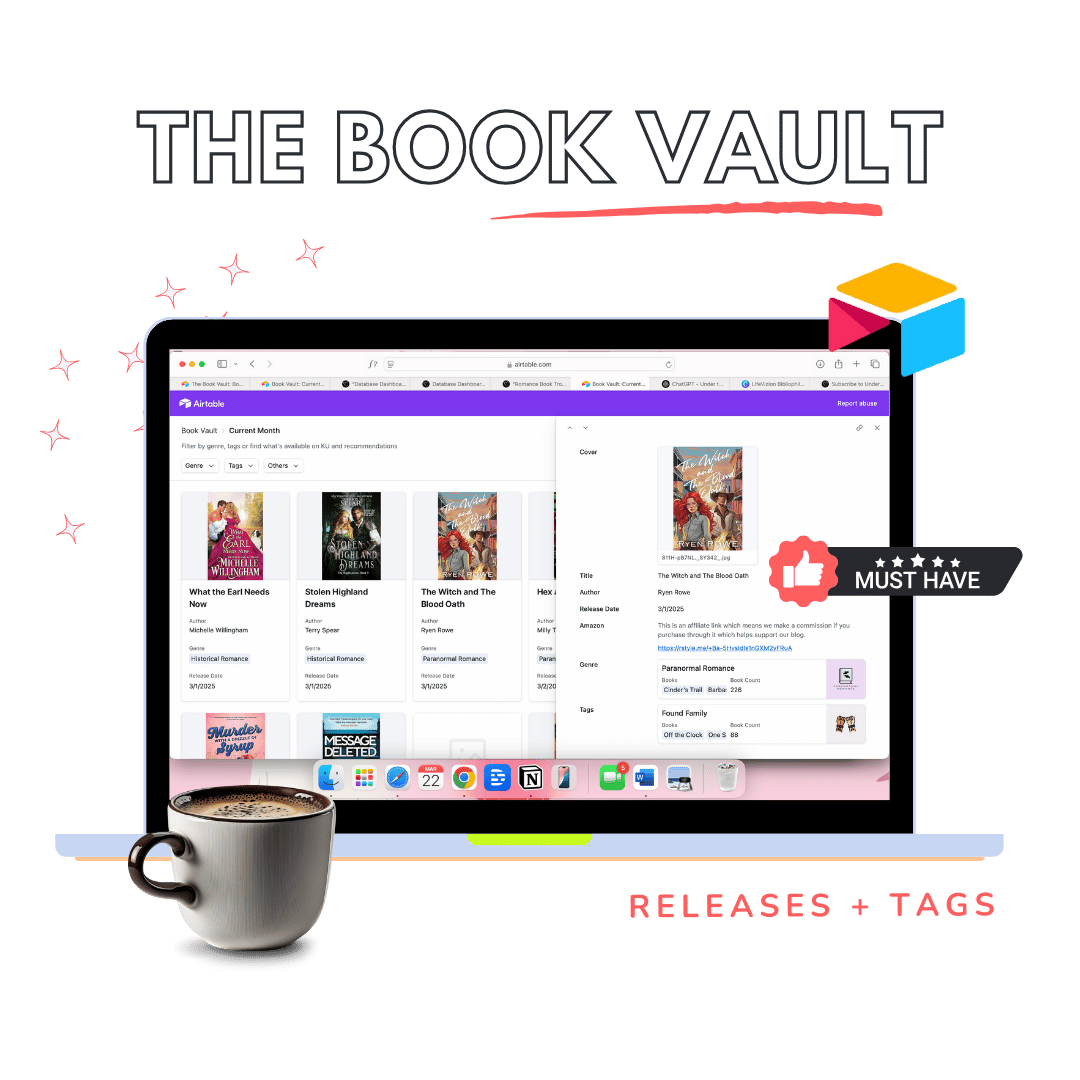
Access the Book Vault
Now completely free for everyone! All the new releases and books featured on the blog and you can filter them by genre and trope. Browse: this week’s new releases, upcoming new releases, and more.
