

The Flame and the Flower by Kathleen E. Woodiwiss: Discussion and Book Review
Reading The Flame and the Flower by Kathleen E. Woodiwiss in 2026: chapter-by-chapter podcast episodes, reading notes, content warnings, and final review.


If you’ve ever heard someone call The Flame and the Flower a “romance classic,” you’re not alone. This 1972 historical romance by Kathleen E. Woodiwiss is often credited as one of the books that helped ignite the 1970s romance boom, the era that shaped what many readers now think of as the vintage bodice ripper.
And if you’re picking it up for the first time now? It can be… a lot. That’s why we’re reading it as part of Ripped & Ravished Book Club, where we discuss the book two chapters at a time on the podcast, talking openly about the story, the tropes, the historical context, and how it lands through a modern consent lens.
This is your one-stop hub for the podcast episode, reader discussion and, once we finish, a final review. Want the club emails? Sign up here.
Tune into the podcast! We chat with author Kate Baxter/Amanda Bonilla about her love for the romance classic.
For the complete podcast discussion playlist, click here.
“This is one of those books where the influence is undeniable…and so is the discomfort.” ~ Under the Covers
Rating: TBD out of 5 stars
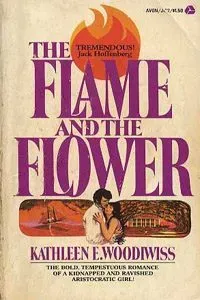
The Flame and the Flower by Kathleen E. Woodiwiss
Birmingham #1
April 1972
Read this if you want:
- 1970s bodice ripper history
- genre archaeology + romance discourse
- forced marriage + power imbalance
- a romance landmark that’s polarizing to modern readers
This post contains affiliate links. That means we receive a small commission at no cost to you from any purchases you make through these links.
Content warnings (book + podcast discussion):
This book includes discussion and depiction of non-consent/rape, coercion, controlling/abusive dynamics, pregnancy, forced marriage, and misogynistic violence/threats. It also contains old-school gender norms, a heroine with very limited agency (especially early on), and themes like virginity obsession and alpha/controlling behavior framed as romantic. Please take care of yourself, read at your own pace, and feel free to skip if any of that isn’t for you right now.
What is The Flame and the Flower by Kathleen E. Woodiwiss about?
The Flame and the Flower follows Heather Simmons, a sheltered young woman with no real protection, whose chance at a better life turns into a series of escalating catastrophes. After a violent misunderstanding and a desperate flight, she crosses paths with Brandon Birmingham, a powerful American sea captain, and one night changes both of their lives forever. What follows is a high melodrama, high stakes story of survival, scandal, and a marriage pushed into existence by circumstance.
Why The Flame and the Flower matters in romance history
Part of why The Flame and the Flower is still talked about is that it sits at a major inflection point for romance publishing, when historical romance became bolder, and more explicit in a way that helped define the 1970s era boom.
If you want more context on the decade as a whole, start here:
We also reference this cultural context piece in the podcast discussion: Jezebel article
Reading Notes & Discussion (Updated as we go)
This is the living “book club” portion of the post with quick takeaways, themes, and questions that keep coming up in the episodes.
Chapters 1-2: Consent, context, and the “good girl loophole”
Listen / watch here to the podcast discussion
The opening chapters establish the tone immediately: high stakes, minimal agency for the heroine, and an early use of the forced seduction/non-consent framework that many modern readers find jarring (or outright intolerable).
What we’re tracking:
- How the narrative frames “romance” vs. what’s actually happening on the page
- The heroine’s agency (what choices exist-and which don’t)
- The story’s attempt to set up the hero for later redemption
- Why this trope existed in older romance-and why it lands differently now
Chapters 3-4: Marriage pressure + the redemption problem
Listen / watch here to the podcast discussion
These chapters push us into the “how does this become a romance?” territory. The story starts using familiar romance structures: marriage pressure, social legitimacy, forced proximity, while also escalating behaviors that are controlling or abusive through a modern lens.
What we’re tracking:
- “Provision” vs. accountability (what the hero thinks counts as making it right)
- The book’s use of secondary characters
- Virginity obsession and how it functions as control
- Whether the power imbalance shifts at all (and if so, how)
Want some company while reading? Check out this 1-hour silent “Read With Me” reading sprint (rain sounds, no mid-roll ads) while reading The Flame and the Flower.
Chapters 5-6: Comfort, control, and the slow-burn stretch
Listen / watch here to the podcast discussion
Would you like to save this?
These chapters slow the pace down and shift into routines: travel logistics, caretaking, and a heavy focus on Heather’s body (pregnancy, illness, “proper” clothing). It’s one of the first sections where Brandon’s “care” starts to read as both protection and control but less overt conflict, more curation of Heather’s world.
What we’re tracking:
- How “caretaking” functions as intimacy and power (baths, clothes, rules)
- Heather’s interior life (and how rarely the book lets us access it)
- Whether the absence of sexual contact changes the tone or just the optics
- How pregnancy raises the stakes and shapes every decision
- The pacing shift: domestic detail vs forward plot momentum
- The return of external conflict as the melodrama ramps up again
Chapters 7-8: Birth, baths, and the romance that keeps withholding
Listen / watch here to the podcast discussion
These chapters bring major plot movement (yes, the baby arrives) but the emotional arc still feels oddly stalled. We get more domestic detail, more caretaking, and more “life together” logistics, while the romance itself keeps hovering just out of reach. Brandon inches toward something like growth, then backslides, and Heather’s inner life remains frustratingly hard to access on the page.
What we’re tracking:
- Whether the “romance” finally shows up emotionally (not just structurally)
- How the book handles pregnancy/childbirth as plot vs character interiority
- Hot-and-cold communication and what counts as growth here
- Heather’s agency now that she’s physically and socially tied to Brandon
- The gap between Brandon’s feelings and Heather’s lived experience
- Whether this is building intimacy… or just building a household
Chapters 9-10: The gothic soap-opera finale
Listen / watch here to the podcast discussion
The last two chapters feel like the book suddenly swerves into a different genre: we finally get the long awaited romance payoff, then the story escalates into full gothic/romantic suspense with blackmail, bodies turning up, and Heather’s London past crashing back into the present. It’s dramatic, fast, and surprisingly hard to put down and it brings several long hanging threads back into the story in a way that makes the ending feel climactic.
What we’re tracking:
- Whether the romance payoff lands as intimacy or ultimatum
- How the book uses jealousy/peril to force emotional “truth” on the page
- Heather’s interiority finally showing up (and what changes when it does)
- The shift into romantic suspense: secrets, blackmail, and danger as plot engine
- What accountability looks like at the end (and what still feels missing)
- Why these final chapters help explain the book’s lasting influence
The Flame and the Flower by Kathleen E. Woodiwiss Book Review
Finishing The Flame and the Flower in 2026 felt like finishing a piece of romance infrastructure. Whether you end up loving it, hating it, or rage-reading it with snacks, it’s easy to see why this book became so influential: it’s big, melodramatic and built on a page-turning saga that modern romance often doesn’t use in the same way.
And here’s the part that surprised me most: the writing is still addictive. Even reading this with today’s eyes, and even after thousands of romance novels, Woodiwiss’s pacing and escalation hooks are hard to resist. The chapters end with just enough momentum, outrage, or curiosity that you keep turning pages, even when you’re side-eyeing the choices on the page.
At the same time, it’s also one of those reads where the distance between “genre history” and “modern consent” is impossible to ignore. The book’s early reliance on forced seduction/non-consent and its repeated “men can’t help themselves” logic will be a hard stop for many readers, and honestly, that’s a completely reasonable boundary. Even for readers who can contextualize it as a product of both 1799 (setting) and the 1970s (publishing moment), it still asks the reader to accept power imbalance as the default romantic language for a long stretch.
What worked best for me wasn’t a tender romance arc in the modern sense, it was the book’s structure: danger, scandal, social pressure, jealousy, secrets, and the sense that Heather is always one wrong move away from catastrophe. Woodiwiss knows how to keep the tension humming, and by the time the story shifts into higher-stakes suspense and confrontation, you can feel why readers at the time experienced this as bold and addictive.
Where it struggled (for me) was interiority and emotional logic, especially for Heather. We often get more access to Brandon’s thoughts than Heather’s, and that imbalance can make her feel like she’s being moved through scenes rather than fully inhabiting them. When the book does slow down, it sometimes leans on domestic detail (clothes, baths, routines) without always deepening the relationship in a way that feels earned. And the redemption question lingers: the story offers “provision” and protection, but modern readers still feel the accountability is incomplete.
So here’s my honest takeaway: The Flame and the Flower is less a “cozy classic” and more a landmark foundational bodice ripper that helps explain how the genre evolved, what it used to demand of heroines, and what it promised women readers in exchange: intensity, fantasy, survival, and ultimately a version of security. If you read it today, it’s best approached as romance archaeology, and even better as a shared conversation rather than a solitary reading experience.
Best for: readers curious about romance history, 1970s bodice rippers, and genre evolution (and who are comfortable reading with heavy context + clear boundaries).
Not for: anyone who doesn’t want on-page coercion/non-consent, extreme power imbalance, or old-school gender norms.
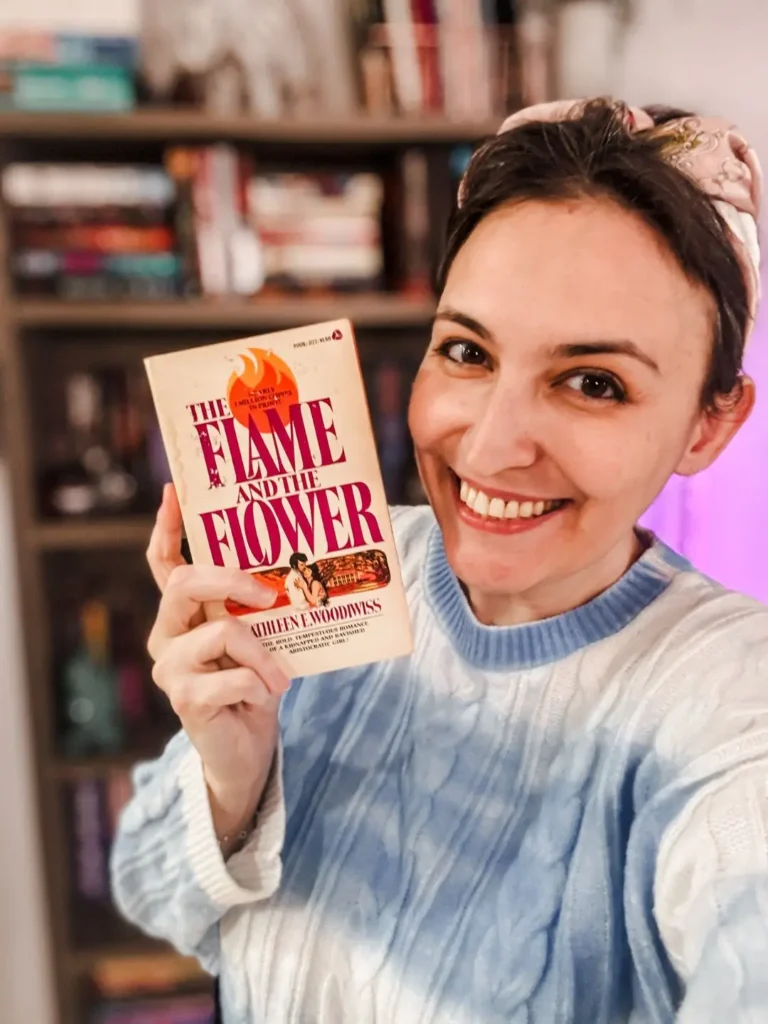
Community Reactions: What Readers Said
One of the best parts of reading The Flame and the Flower has been realizing how differently it lands depending on your reading history, tolerance for vintage tropes, and what you bring to the page. Here are a few standout reactions from book club readers. Reader comments may be edited for length/clarity.
- Chris (Fairfax, VA): “Rereading old-school romance felt like finding an old dress in my closet and wondering What Was I Thinking??”
- Nancy (Middletown, NY): “The ‘good girl’ pressure doesn’t just feel like the 1970s, women have always been expected to be ‘good.’ The trope creates a way for her to experience desire without being labeled ‘bad.'”
- Teresa (Chicago): “Brandon gives juuuust enough to keep Heather hoping he’s a good man… and then swings back into alpha-hole logic. Make that make sense.”
- Shannon: “Brandon Birmingham, the inventor of sweat pants. Who knew?”
- Kim: “Was everyone bathing this much??” (Also: “The convenience? …Ohhhh…the toilet.”)
- Diane DF: “What I took from this book as a young reader was the HEA and the revelation that women could enjoy sex…and that women’s pleasure was centered.”
- Christine J: “The recurring theme that men can’t control themselves, so it becomes Heather’s responsibility to hide, shows up loud in this book.”
Reading along with a community has made this book become a conversation about romance history, changing norms, and what we expect from love stories now.
Want to add your thoughts? Comment here and let us know:
- Are you a first-time reader or rereading?
- Has the book made the hero feel more redeemable… or less?
- What’s your personal boundary line with vintage romance + consent?
Don’t forget to join the Ripped & Ravished Book Club, reading a vintage romance every two months. And if you want more recs, check out the rest bodice ripper romances.
Pin this for later

After listening to your discussion on chapters 3 and 4, I’m wondering how you’re going to react to Rosemary Rogers and Bertrice Small. I consider Kathleen Woodiwiss tame when compared to them. One thing to keep in mind is before this book was published pretty much all romances were like Hallmark movies. No kissing until the end of the book and then the door shut.